


DMCA Claims, DMCA 512, and the CCB
A practical guide to understanding how DMCA takedown notices, counter-notices, Section 512 issues, and Copyright Claims Board proceedings can overlap.
3.
How DMCA Claims Connect to the CCB
↓
4.
Takedown Notices, Counter-Notices, and Misrepresentation
↓
1. What Is a DMCA Claim?
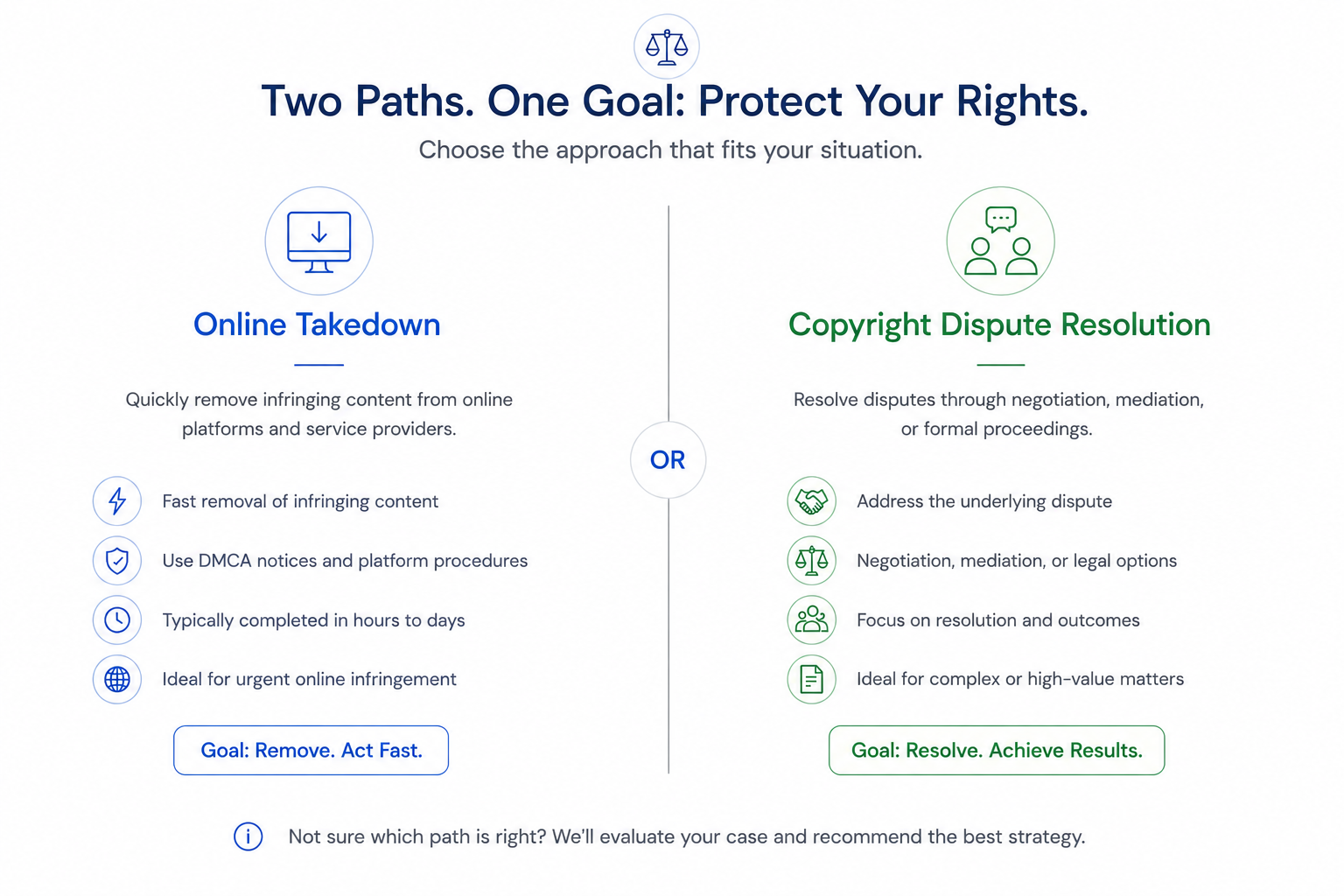
A DMCA claim usually refers to a copyright takedown request or related response under the Digital Millennium Copyright Act. In practice, the term often appears when copyrighted content is posted online and a copyright owner asks a website, marketplace, hosting provider, or social platform to remove it.
A DMCA claim is usually focused on online removal. It may help stop or limit access to allegedly infringing material, but it does not automatically resolve every issue in the dispute. It may not recover damages, settle ownership questions, address past use, or prevent the same content from appearing elsewhere.
That is why DMCA strategy should be connected to the broader copyright enforcement strategy. A takedown notice may be the right first step in some matters. In others, a demand letter, Copyright Claims Board claim, settlement agreement, or lawsuit for copyright infringement may be more appropriate.
2. What Is DMCA 512?
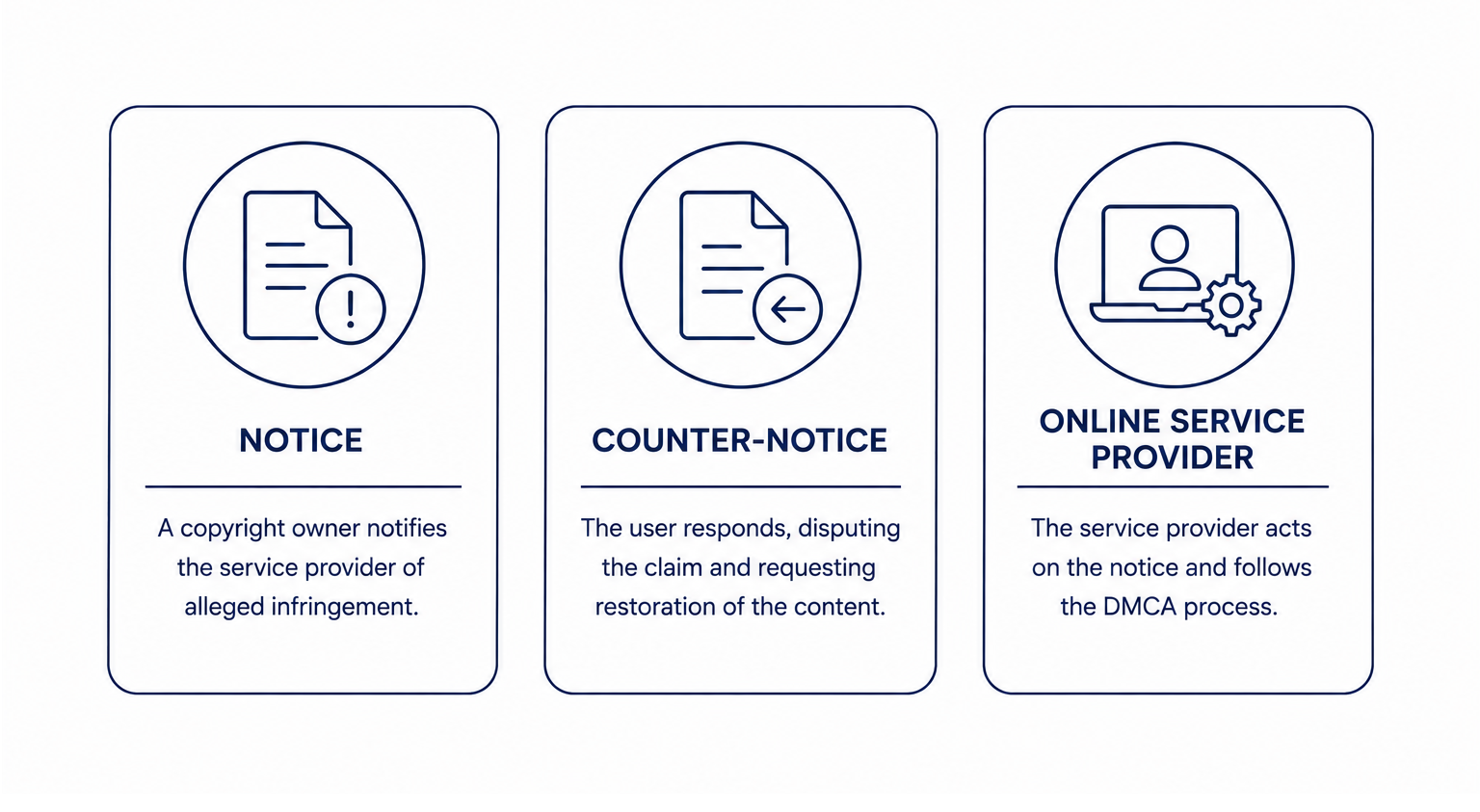
DMCA 512 refers to Section 512 of the Copyright Act. This section is closely associated with online service provider safe harbors and the notice-and-takedown system. In general, it gives copyright owners a process for notifying service providers about allegedly infringing material, while also giving users a counter-notice process in certain situations.
For copyright owners, Section 512 can provide a fast path to request removal of infringing online content. For accused users, the counter-notice process may provide a way to challenge a takedown when the material was removed by mistake or misidentification.
The process is powerful, but it should be used carefully. A takedown notice should be based on a good-faith belief that infringement is occurring. A counter-notice should also be considered carefully because it may escalate the dispute.
3. How DMCA Claims Connect to the CCB
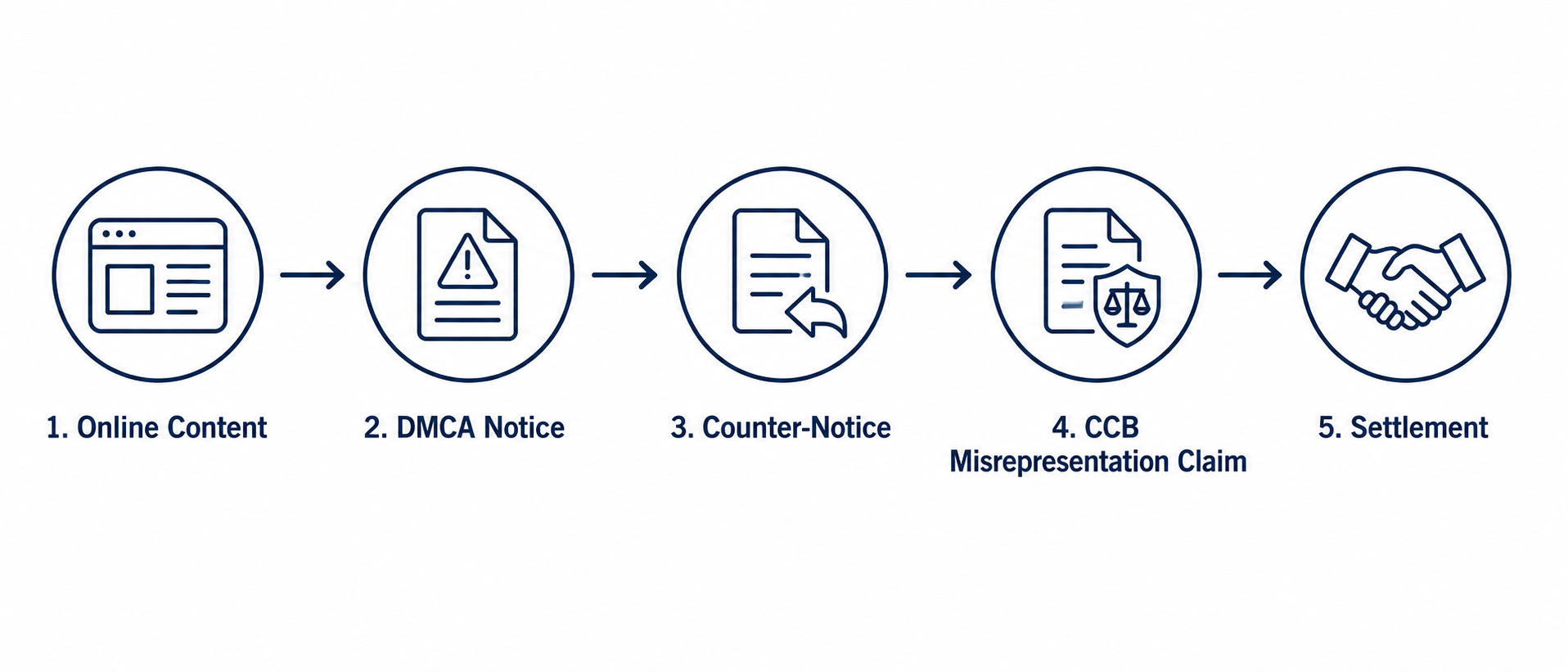
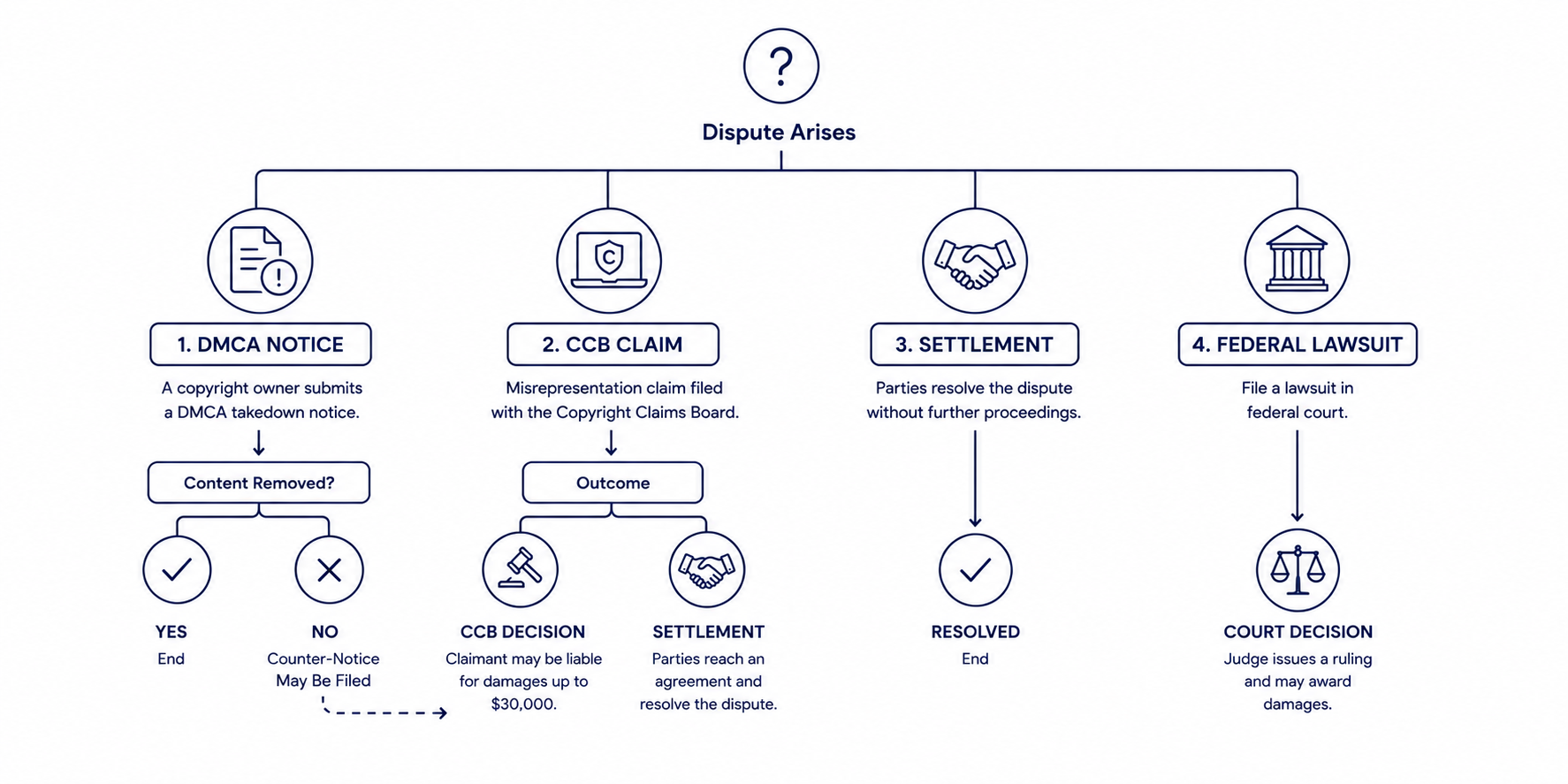
A DMCA claim is not the same as a Copyright Claims Board case. However, the two can overlap.
The Copyright Claims Board may hear certain misrepresentation claims connected to DMCA takedown notices or counter-notices. This can matter when one party believes another party made a false or incorrect statement in a takedown notice or counter-notice and that statement caused harm.
The CCB may also become relevant after a DMCA dispute if the parties need a forum to resolve related copyright infringement, non-infringement, or misrepresentation issues. For example, a takedown notice may remove the content, but the copyright owner may still want compensation. Or the accused party may believe the takedown was improper and wants to evaluate a response or defense.
4. Takedown Notices, Counter-Notices, and Misrepresentation
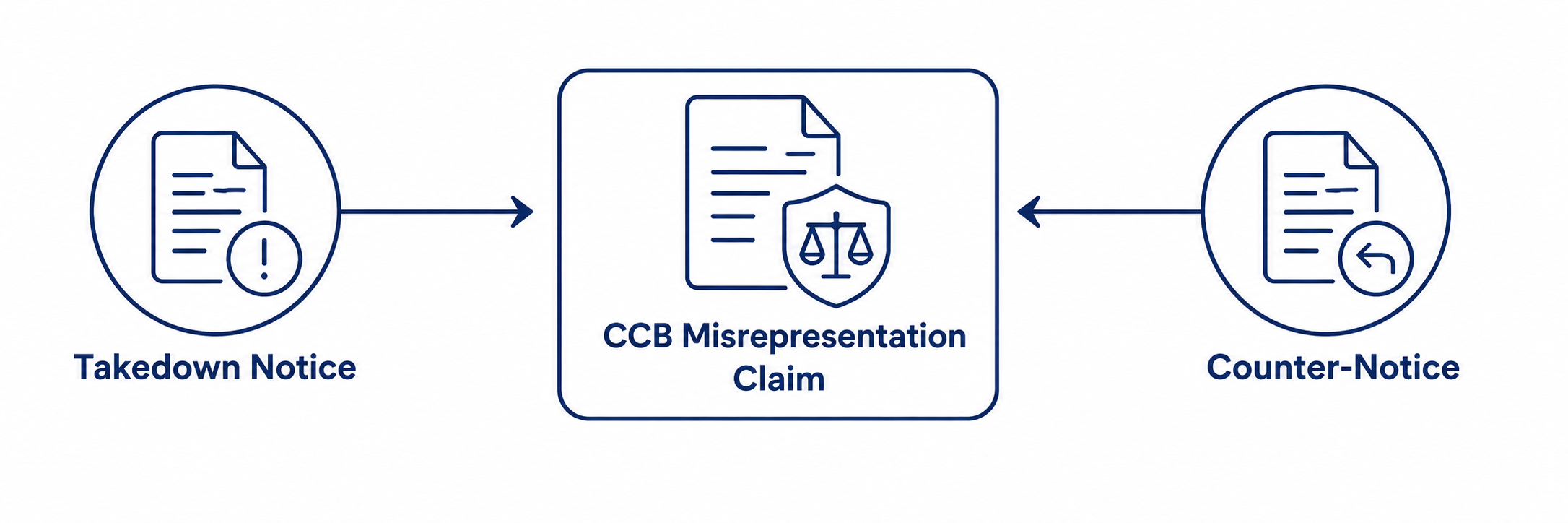
Misrepresentation is the key bridge between DMCA 512 and the Copyright Claims Board. In general, a DMCA misrepresentation issue may arise when a party makes a false or incorrect statement in a takedown notice or counter-notice, knows the statement is false or incorrect, and the statement is important to the service provider’s decision to remove or restore content.
Not every mistake will support a misrepresentation claim. Minor errors, incomplete details, or disagreements about legal conclusions may not be enough. The stronger question is whether the statement was materially false, whether the party knew or should have understood the issue, whether the service provider relied on it, and whether harm resulted.
For copyright owners, the risk is overreaching with a takedown notice. For accused users, the risk is submitting a counter-notice without understanding the legal and procedural consequences. Both sides should preserve evidence and evaluate the facts before escalating.
5. Choosing Between DMCA, CCB, and Federal Court
The right path depends on the client’s goal. If the immediate goal is removing online content, a DMCA takedown notice may be appropriate. If the goal is compensation, a formal determination, or resolution of a smaller eligible dispute, the Copyright Claims Board may be worth evaluating. If the dispute is high-value, complex, or requires stronger court remedies, federal court may be the better forum.
These paths are not always separate. A matter may begin with a DMCA notice, move into settlement discussions, and later require a CCB claim or federal lawsuit. The strategy should be built around the facts, evidence, damages, registration status, risk tolerance, and business objective.
6. How Cohn Legal Can Help
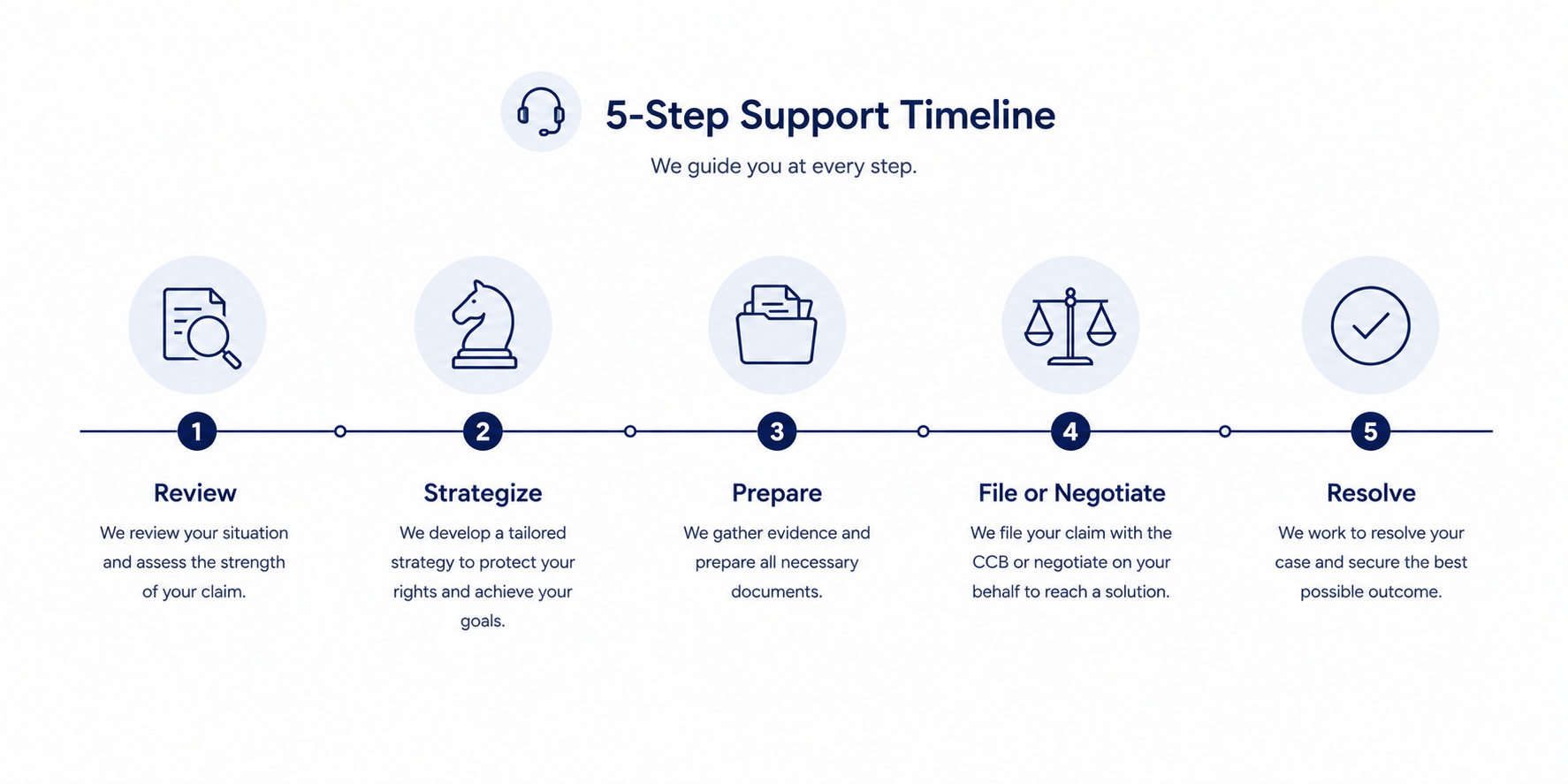
Cohn Legal, PLLC helps clients evaluate DMCA claims, takedown notices, counter-notices, Copyright Claims Board strategy, and copyright enforcement options. The goal is not to force every matter into the same process. The goal is to choose the path that protects the client’s rights and avoids unnecessary risk.
Legal guidance can be especially important when a takedown notice may be challenged, a counter-notice could escalate the matter, a misrepresentation claim may be possible, or the client needs to decide between a DMCA strategy, CCB claim, settlement, or federal litigation.
Cohn Legal can help review the facts, preserve evidence, evaluate ownership and registration, assess fair use or license issues, prepare a takedown or response strategy, and determine whether the CCB is the right forum.
DMCA Claims, DMCA 512, and CCB Questions
Is a DMCA claim the same as a CCB claim?
No. A DMCA claim is usually focused on online takedown or counter-notice activity. A CCB claim is a formal proceeding before the Copyright Claims Board.
What is DMCA 512?
DMCA 512 refers to Section 512 of the Copyright Act, which includes online service provider safe harbor and notice-and-takedown procedures.
Can the CCB hear DMCA-related claims?
The CCB may hear certain misrepresentation claims connected to DMCA takedown notices or counter-notices, along with eligible infringement and non-infringement claims.
Does a DMCA takedown recover damages?
A takedown notice usually focuses on removal or disabled access. Monetary recovery may require a separate strategy, such as settlement, a CCB claim, or federal litigation.
Should I send a counter-notice if my content was removed?
A counter-notice can have legal consequences and may escalate the dispute. It should be evaluated carefully before submission.
When should I speak with a copyright lawyer about a DMCA issue?
You should consider speaking with a copyright lawyer before sending a takedown notice, submitting a counter-notice, filing a CCB claim, or responding to a threat of litigation.
Use DMCA and CCB Strategy Carefully
DMCA claims can be useful for removing online infringement, but they do not always resolve the entire copyright dispute. The Copyright Claims Board may offer another path when the dispute involves eligible claims, monetary relief, or alleged misrepresentations connected to takedown notices or counter-notices.
Cohn Legal, PLLC can help you evaluate the right path before you send a notice, respond to a claim, submit a counter-notice, or escalate the dispute.