


CCB Examples, Packaging, and Recent Cases
A practical guide to common Copyright Claims Board examples, packaging and product-content disputes, marketplace copying, and recent copyright infringement trends.
1.
What CCB Examples Can Teach You
↓
2.
Common Copyright Claim Examples
↓
3.
Packaging Artwork and Product Content
↓
4.
Marketplace and Online Listing Disputes
↓
1. What CCB Examples Can Teach You
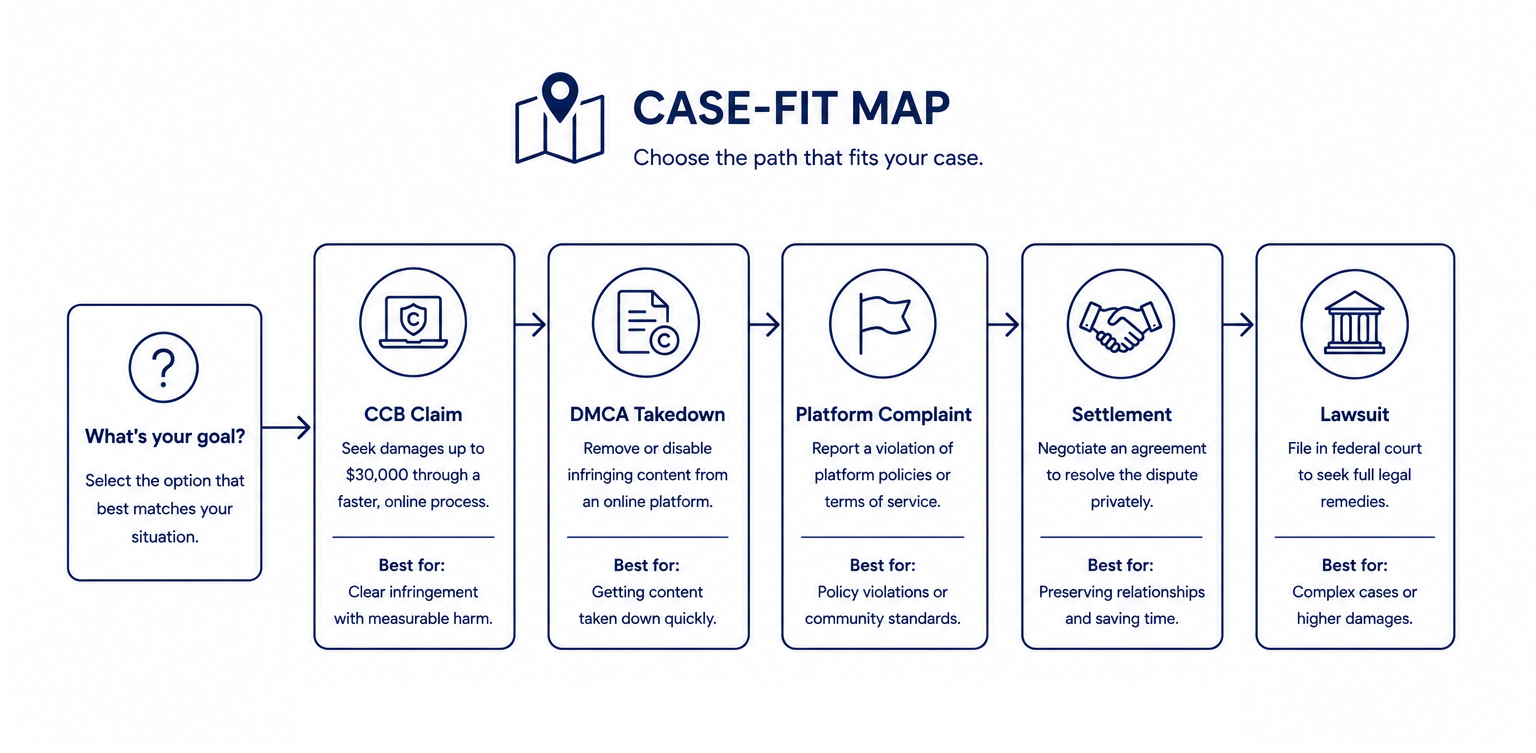
CCB examples are useful because they help copyright owners and respondents understand what kinds of disputes may fit within the Copyright Claims Board process. They can also show why some matters are better handled through negotiation, a DMCA claim, platform enforcement, or a lawsuit for copyright infringement.
The most helpful examples are not just about what was copied. They also consider who owns the work, whether the work is protected by copyright, what evidence exists, what damages may be available, and whether the respondent is likely to participate or opt out.
A copied photograph, product image, written description, video, packaging graphic, or online listing may raise copyright issues, but the right enforcement path depends on the facts.
2. Common Copyright Claim Examples
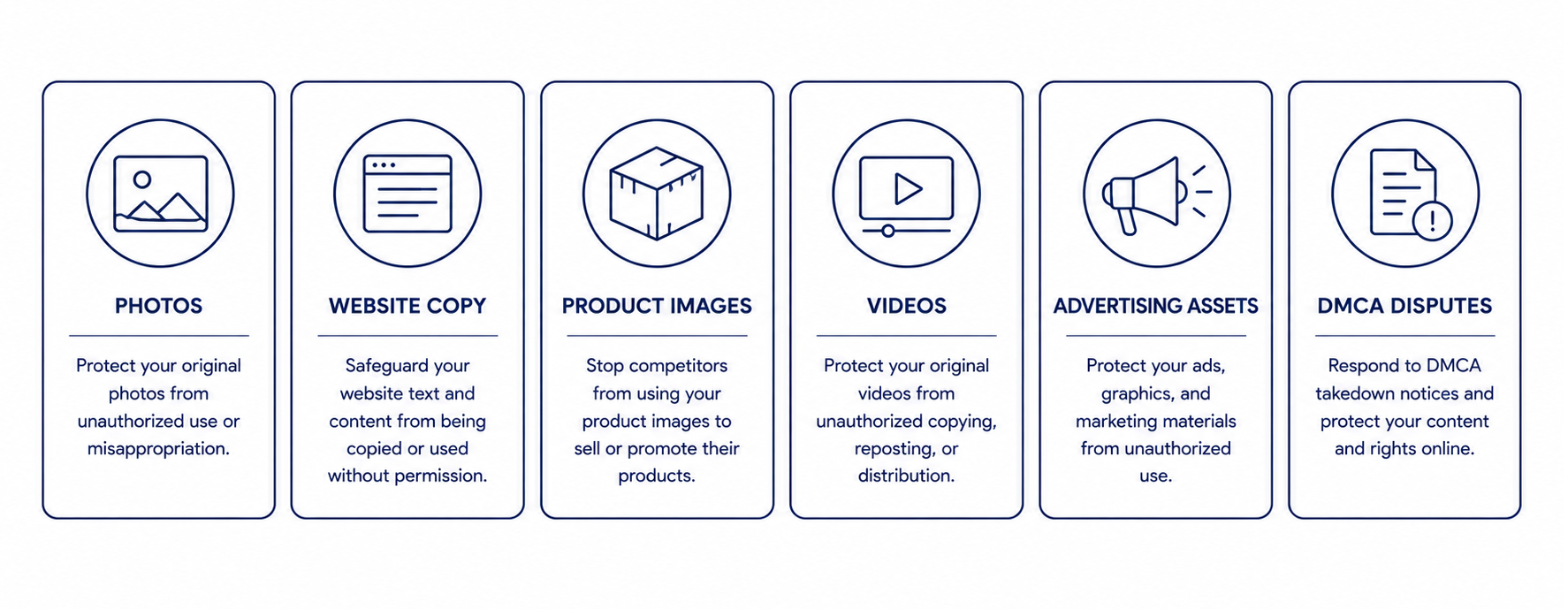
Many CCB matters begin with a practical discovery: someone used protected work without permission. The work may appear on a website, marketplace listing, social media post, advertisement, product page, video, or printed material.
Common examples may involve copied photographs, reused written content, unlicensed illustrations, product images, videos, creative assets used in advertising, or digital content copied by a competitor.
These examples do not automatically mean a CCB claim should be filed. The claim still needs evidence, ownership analysis, damages review, and a strategy for how the respondent may react.
3. Packaging Artwork and Product Content
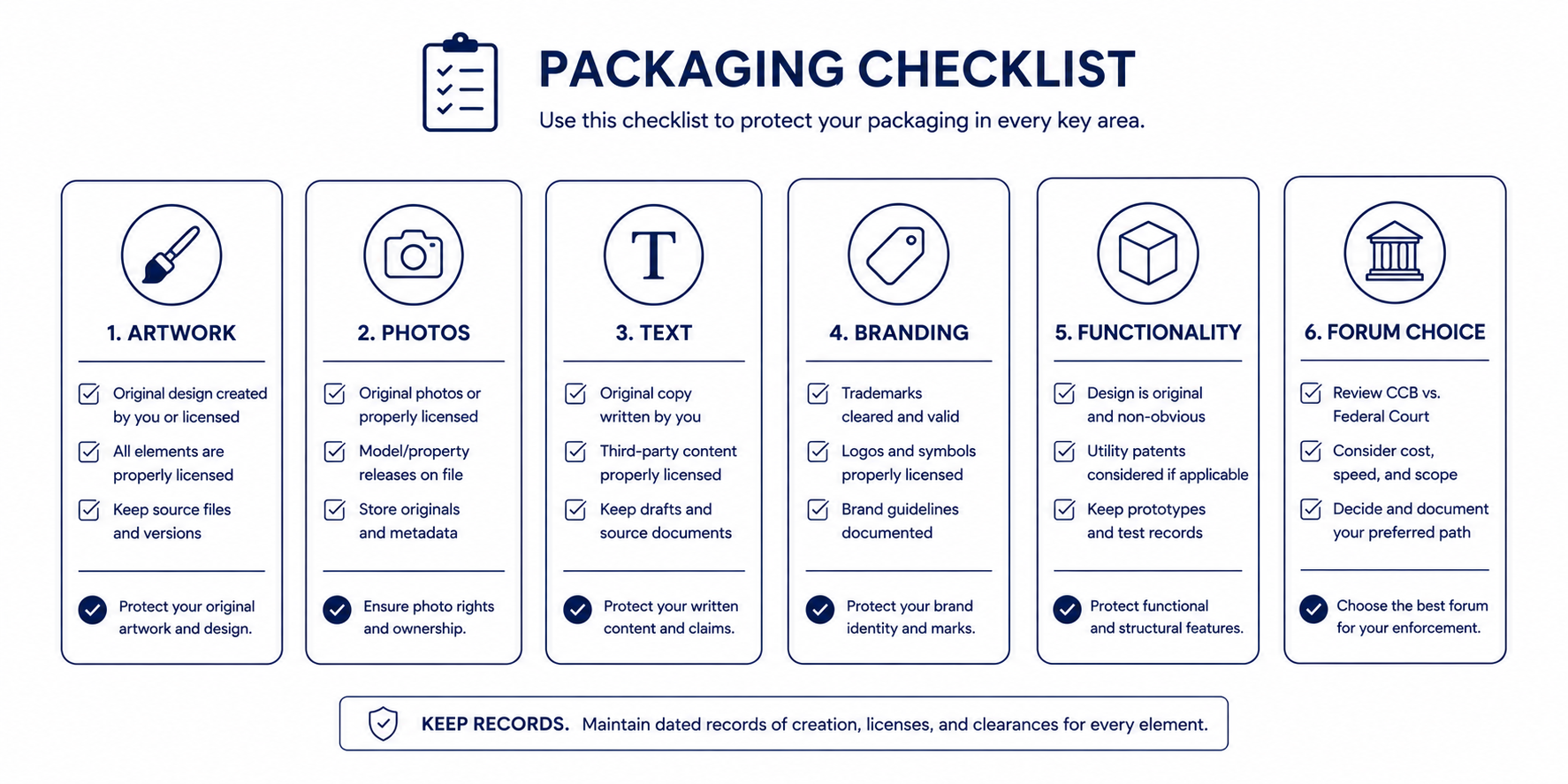
Packaging disputes can involve several different types of intellectual property. Some packaging issues may involve copyright, while others may involve trademarks, trade dress, unfair competition, or design rights.
A Copyright Claims Board matter may be worth evaluating if the dispute involves copied artwork, product photography, illustrations, written product descriptions, label graphics, instruction-sheet text, creative layout elements, or other protectable expression used on packaging or product pages.
However, not every packaging issue is a copyright issue. Functional packaging features, product names, short phrases, brand identifiers, and general ideas may require a different legal theory. The first step is to identify what was copied and what legal right protects it.
4. Marketplace and Online Listing Disputes
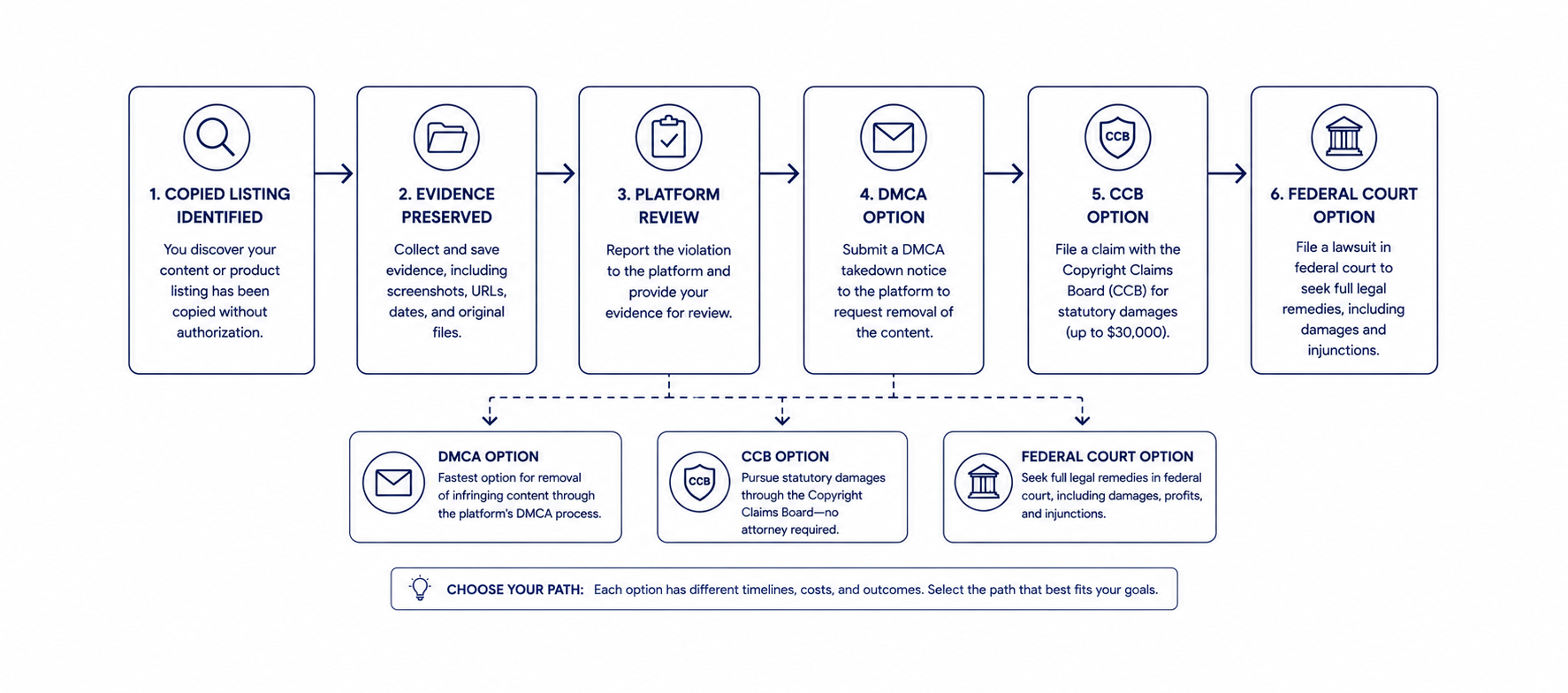
Online marketplace disputes often arise when someone copies a product image, listing photo, written description, video, or creative asset and uses it to sell competing goods. This may happen on eBay, Amazon, Etsy, social platforms, independent websites, or other marketplaces.
A person searching for how to file a claim on eBay may have several possible paths, depending on what was copied and what outcome they want. A platform complaint may help remove the listing. A DMCA notice may help address online infringement. A CCB claim may be considered when monetary relief or a formal determination is important. A federal lawsuit may be appropriate for higher-value or more complex disputes.
The right path depends on whether the seller can be identified, whether the work is registered or pending registration, whether the copied material is still online, what damages can be shown, and whether a platform process can solve the immediate problem.
5. Recent Copyright Infringement Trends
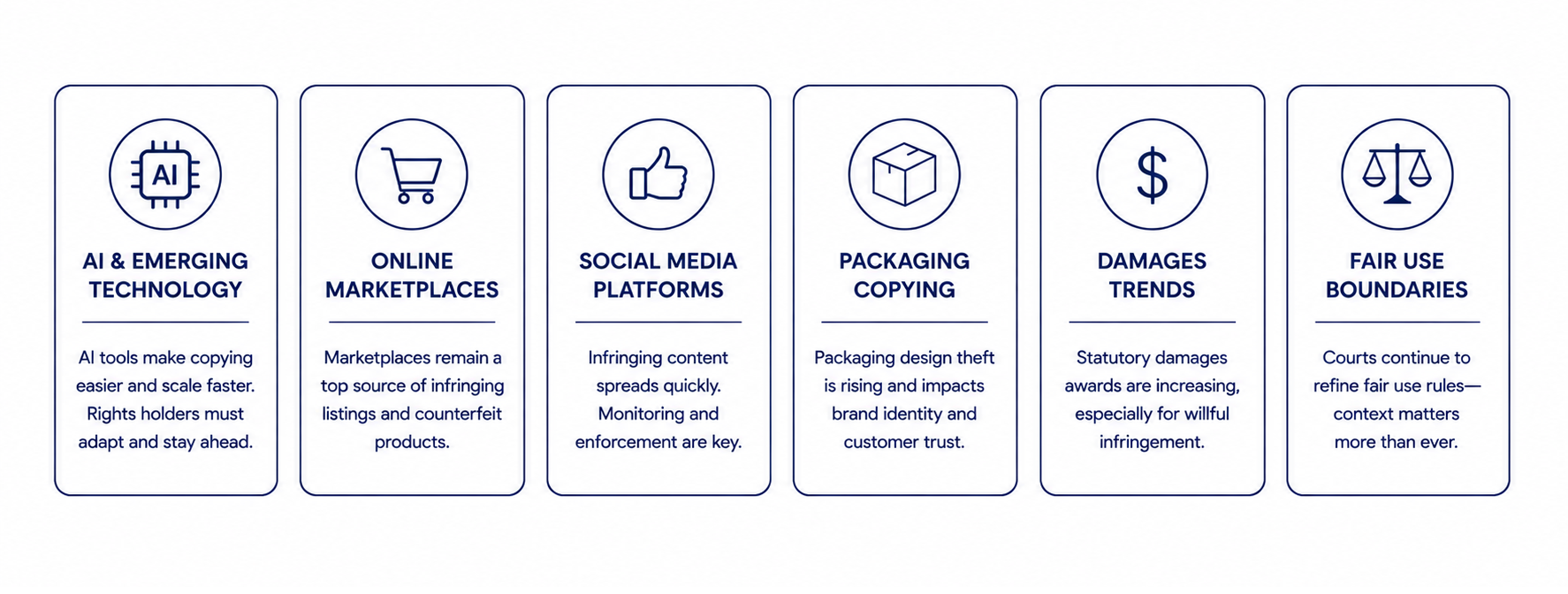
Recent copyright infringement cases can help users understand what kinds of disputes are drawing attention, but a recent case does not automatically decide another party’s CCB matter. Copyright strategy still depends on the facts, evidence, ownership, damages, defenses, and forum.
Current copyright disputes often involve digital copying, online marketplace content, social media uses, music and video clips, AI-related copying, and fair use arguments. For a CCB-focused page, the recent-cases section should be written as a trends module rather than a long case-law summary that can quickly become outdated.
This section should be refreshed periodically if the site later adds specific case summaries. The evergreen value is to help users understand the practical lesson: copyright disputes are fact-specific, and the best enforcement path is not always the most aggressive one.
6. How Cohn Legal Can Help
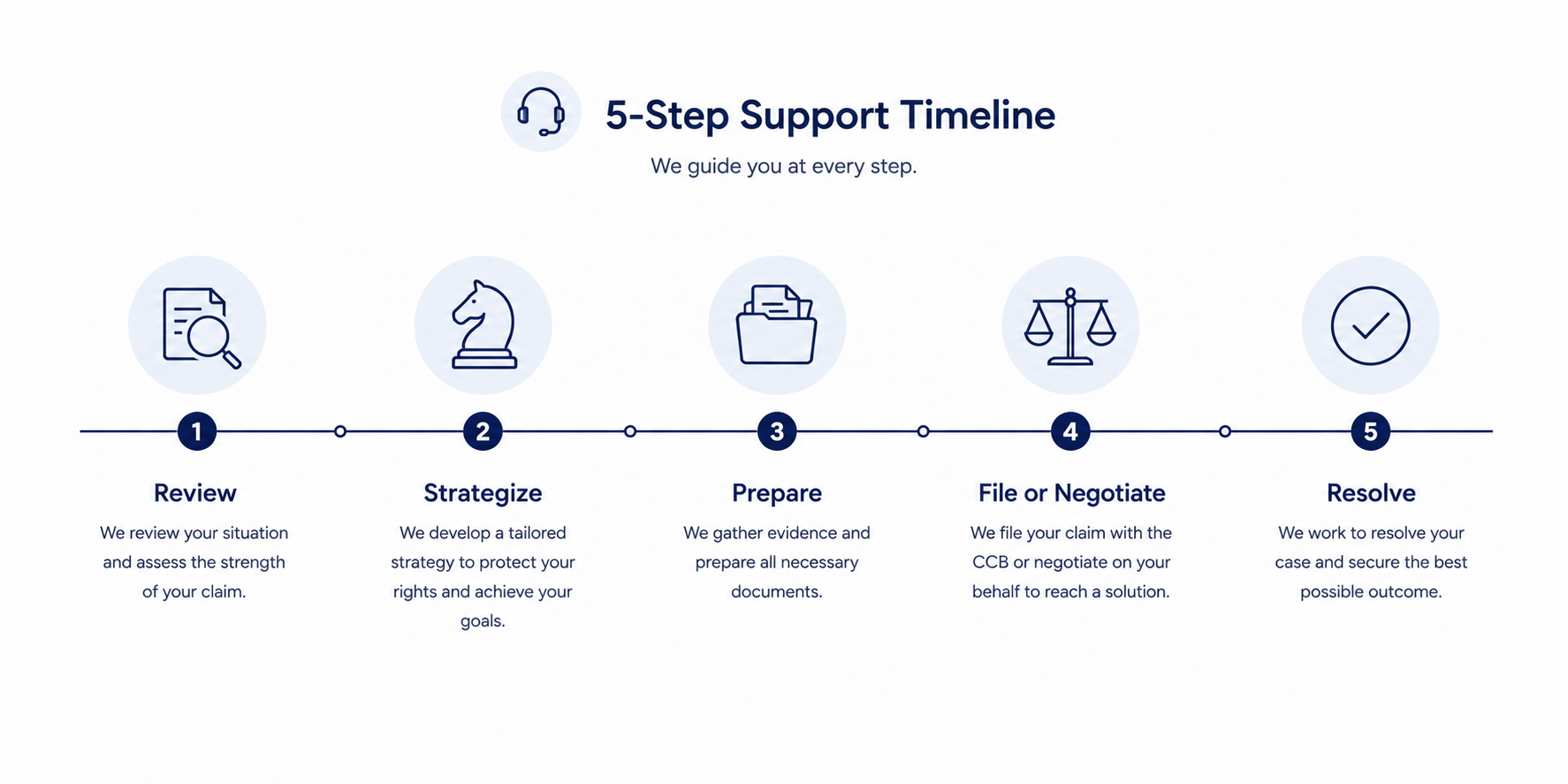
Cohn Legal, PLLC can help copyright owners and respondents evaluate whether a dispute fits the Copyright Claims Board, a DMCA process, a platform complaint, settlement negotiations, or a federal lawsuit for copyright infringement.
For example-based pages, the goal is not to force every situation into the CCB. The goal is to identify the right legal category, preserve the right evidence, assess damages and defenses, and choose the path that creates the strongest practical outcome.
Cohn Legal can help identify what work was copied and who owns it, determine whether the issue is copyright, trademark, trade dress, or another IP concern, preserve screenshots and listings, evaluate the right forum, and build a practical enforcement or defense strategy.
CCB Examples and Copyright Claim Questions
Are CCB examples the same as legal precedent?
No. Examples can help users understand common dispute patterns, but each matter depends on its own facts, evidence, damages, and defenses.
Can packaging artwork be part of a Copyright Claims Board claim?
Possibly. If original artwork, product photography, written content, or other protectable expression was copied, a CCB claim may be worth evaluating.
Is every copied package design a copyright infringement issue?
No. Some packaging disputes may involve trademark, trade dress, design rights, unfair competition, or functional product-design issues instead of copyright.
What should I do if someone copied my product photos or online listing?
Preserve screenshots, URLs, dates, seller information, original files, licenses, and any platform notices before deciding whether to use a platform complaint, DMCA notice, CCB claim, or another path.
Do recent copyright infringement cases control my CCB claim?
Usually no. Recent cases may show trends, but the CCB strategy should be based on the specific work, copying, ownership, defenses, and damages in your dispute.
Should I use a DMCA notice or file a CCB claim?
It depends on your goal. A DMCA notice may help remove online content, while a CCB claim may seek monetary relief or a formal determination for eligible disputes.
Use CCB Examples to Build a Clear Strategy
CCB examples can help you recognize the type of copyright dispute you may have, but examples are only the starting point. A strong strategy requires clear evidence, ownership analysis, damages review, and the right forum choice.
Whether the issue involves copied product photos, packaging artwork, online listings, website content, DMCA disputes, or recent copyright infringement trends, Cohn Legal, PLLC can help you evaluate the path forward.