


Filing a Copyright Claim Through the CCB
A practical guide to preparing a Copyright Claims Board claim, documenting infringement, evaluating damages, and deciding whether the CCB is the right forum for your dispute.
1.
When Filing a CCB Claim May Make Sense
↓
2.
What to Prepare Before Filing
↓
3.
Evidence for a Strong CCB Claim
↓
4.
How the CCB Filing Process Works
↓
1. When Filing a CCB Claim May Make Sense
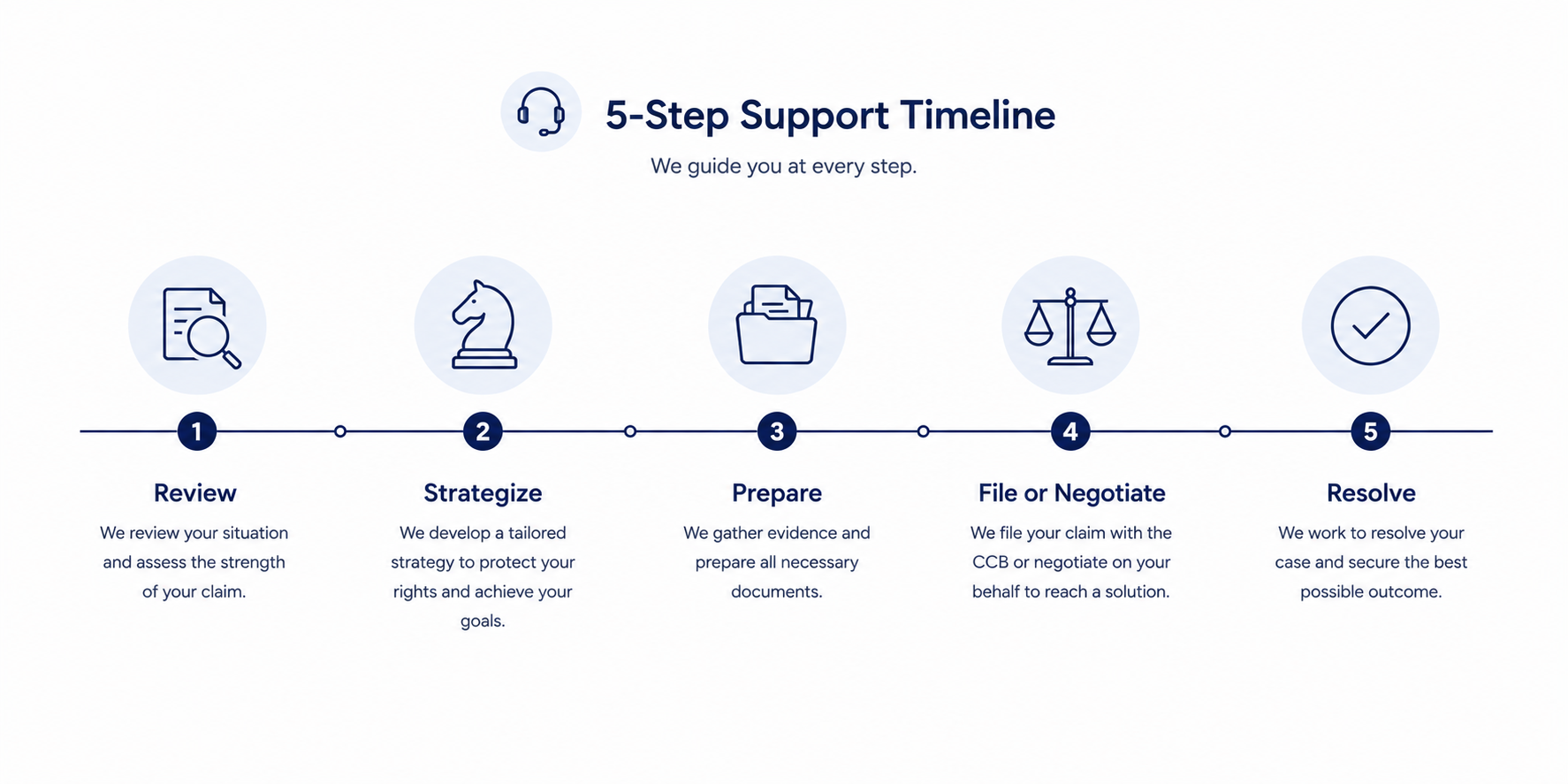
Filing a Copyright Claims Board claim may make sense when a copyright dispute is real, the damages are meaningful but limited, and the matter would benefit from a more streamlined process than federal litigation.
This may include disputes involving copied photographs, reused website content, unlicensed videos, copied product images, packaging artwork, creative assets used in advertising, or online marketplace listings that use protected content without permission.
The CCB is not the right forum for every copyright dispute. If the matter involves high-value damages, complex ownership issues, multiple parties, broader discovery, or urgent court relief, a lawsuit for copyright infringement may be the stronger path.
2. What to Prepare Before Filing
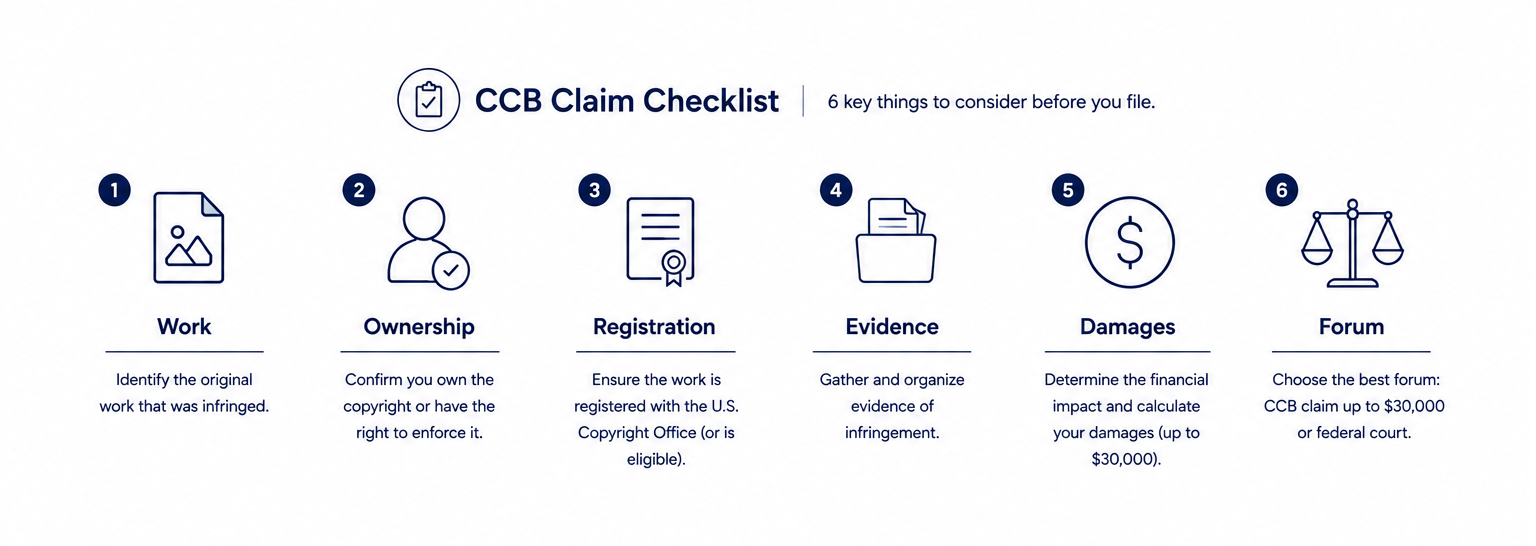
A strong CCB filing starts before the claim is submitted. The claimant should identify the copyrighted work, confirm ownership, review registration status, document the unauthorized use, and evaluate what damages can realistically be supported.
The goal is not simply to file quickly. The goal is to file clearly. A well-prepared claim should explain what was copied, who owns the rights, how the respondent used the work, and why the requested relief makes sense.
3. Evidence for a Strong CCB Claim
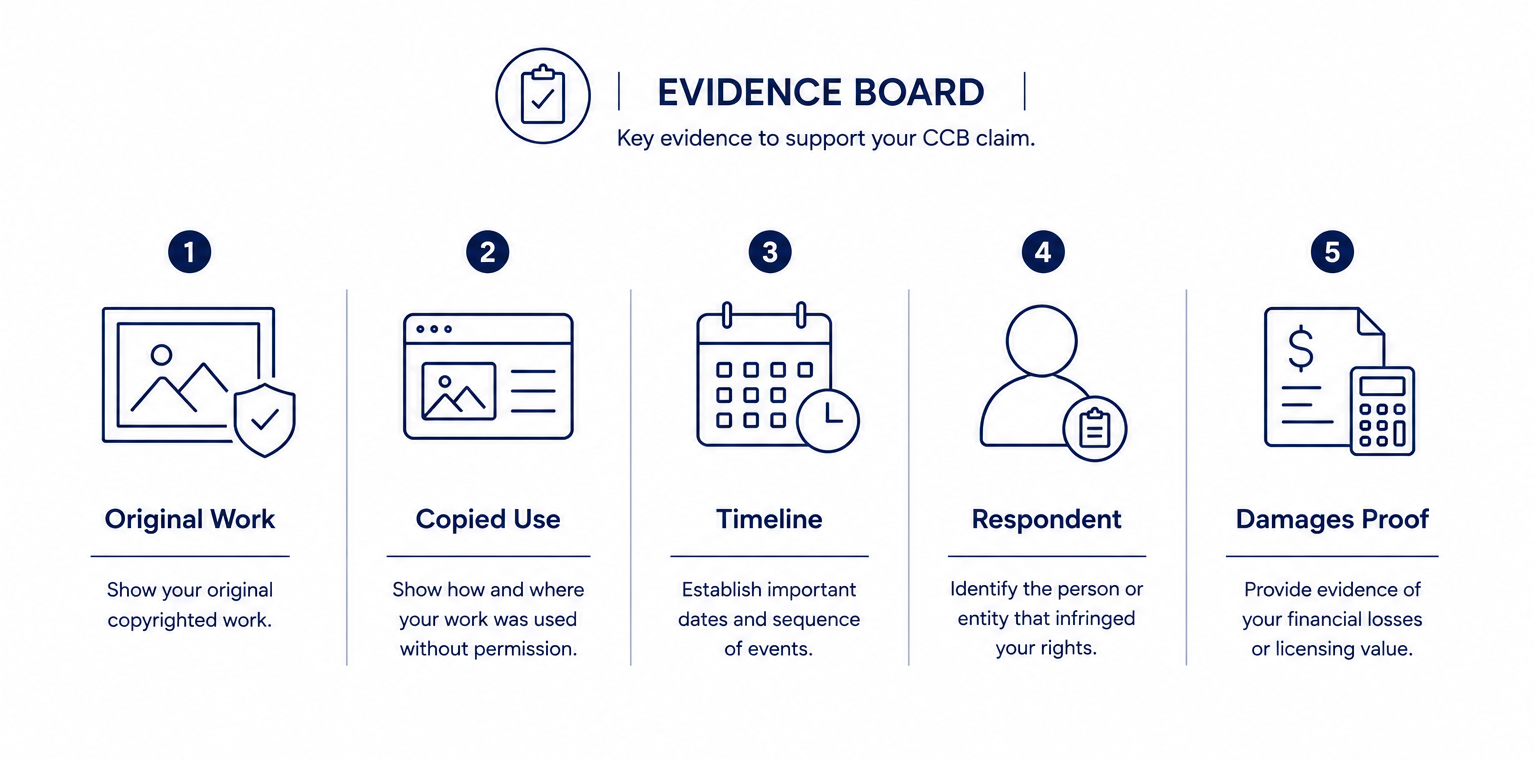
Evidence is one of the most important parts of a CCB claim. A filing should not rely on broad accusations. It should organize the facts in a way that shows what happened, when it happened, and why the use was unauthorized.
Useful evidence may include screenshots of the infringing use, URLs, archived pages, original files, copyright registration records, licensing history, invoices, emails, demand letters, platform notices, and proof that the use continued or was removed.
For online marketplace disputes, including situations where someone used copyrighted work on eBay or another platform, evidence should preserve the listing, seller information, product images, descriptions, dates, and any communications before the listing changes or disappears.
4. How the CCB Filing Process Works
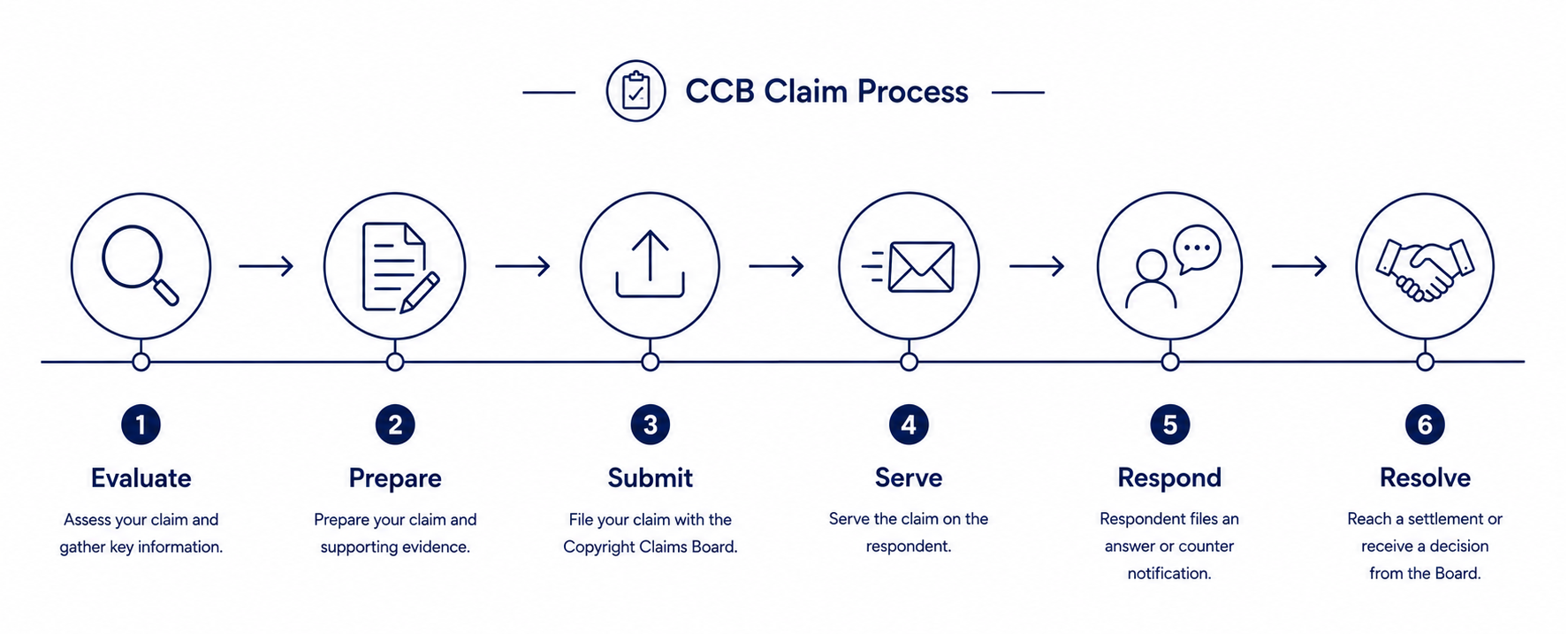
The CCB filing process is designed to be more streamlined than a federal copyright lawsuit, but it still requires careful preparation. The claimant must prepare the claim, submit the required information, and serve the respondent according to the applicable process.
After notice is provided, the respondent may have important decisions to make. Depending on the circumstances, the respondent may participate, respond, negotiate, assert defenses, bring counterclaims, or opt out when available.
If the matter proceeds, the parties may exchange limited information, submit evidence and arguments, and resolve the dispute through settlement or a final determination.
5. Filing Strategy, Damages, and Risks
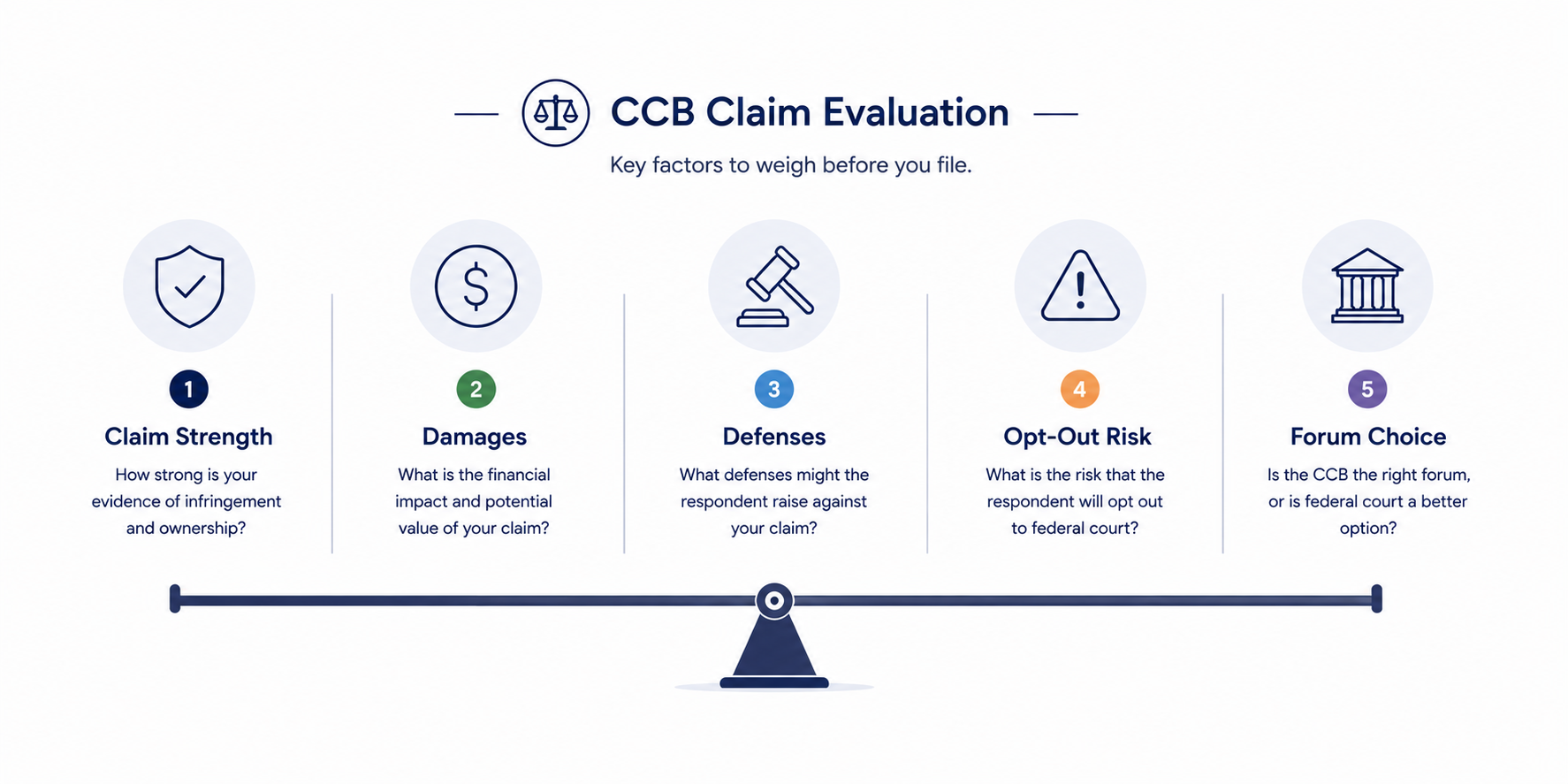
A CCB claim should be filed as part of a broader enforcement strategy. Before filing, the claimant should consider damages, registration timing, likely defenses, whether the respondent may opt out, and whether settlement outreach should come first.
Copyright infringement damages can include actual damages, infringer profits, or statutory damages depending on the facts and registration timing. In the CCB, damages are capped, so the forum should be evaluated against the practical value of the dispute.
A claimant should also anticipate possible defenses. The respondent may argue license, fair use, independent creation, public domain, non-infringement, lack of substantial similarity, ownership problems, or damages limitations.
6. How Cohn Legal Can Help
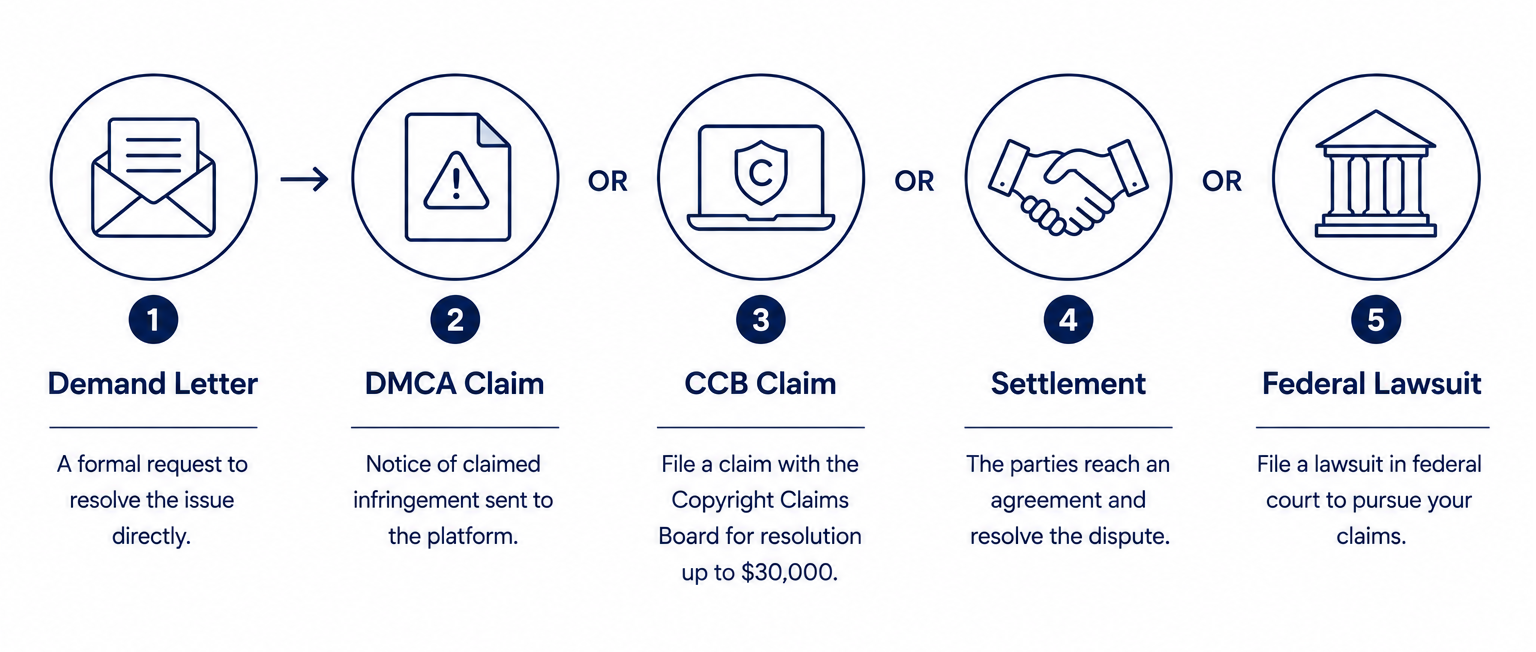
Cohn Legal, PLLC helps copyright owners and businesses evaluate whether a Copyright Claims Board claim is the right enforcement path. The firm can review the facts, assess ownership and registration issues, organize evidence, evaluate damages, and consider whether negotiation, DMCA action, settlement, or federal court may be better.
Legal guidance can be especially important before filing because the CCB process creates real consequences. A claim should be clear, evidence-based, and aligned with the client’s business goals.
Copyright Claim Filing Questions
Do I need copyright registration before filing a CCB claim?
Registration status matters. A claimant should review whether the work is registered or pending registration and how that affects damages, leverage, and filing strategy.
What evidence should I prepare before filing?
Useful evidence may include screenshots, URLs, archived pages, original files, registration records, licensing history, invoices, correspondence, and platform notices.
Can I file a claim if someone used my work on eBay or another marketplace?
Possibly. Depending on the facts, options may include a platform complaint, DMCA notice, demand letter, CCB claim, or lawsuit for copyright infringement.
What happens if the respondent opts out?
If a respondent opts out where allowed, the CCB claim may not proceed in that forum, but the dispute may continue through negotiation or federal court.
Can a CCB claim recover copyright infringement damages?
Eligible claims may seek monetary relief, but damages in the CCB are capped and should be evaluated before filing.
File a Copyright Claim With a Clear Strategy
Filing a Copyright Claims Board claim can be practical, but it should be backed by clear ownership, organized evidence, realistic damages analysis, and a strategy for how the respondent may react.
Cohn Legal, PLLC can help evaluate the forum, prepare the claim, and choose the path that best protects your work and business interests.