


Non-Infringement and Copyright Defenses
A practical guide to defending copyright infringement claims, understanding non-infringement arguments, and assessing response options in Copyright Claims Board matters.
1.
What Does Non-Infringement Mean?
↓
2.
Common Copyright Defenses
↓
3.
Why “No Copyright Infringement Is Intended” Is Not Enough
↓
4.
Evidence That Can Support a Defense
↓
1. What Does Non-Infringement Mean?
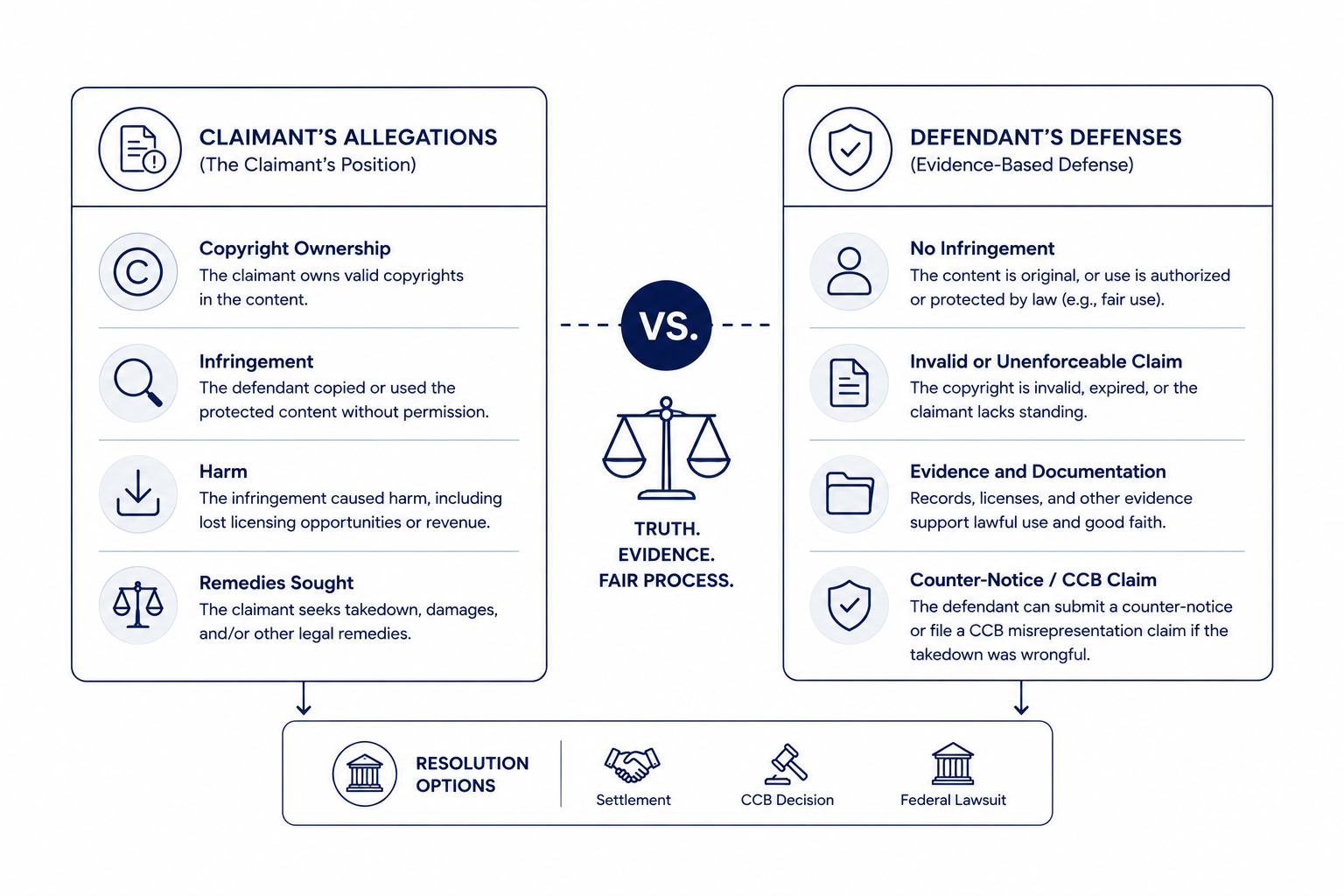
Non-infringement means the accused conduct does not violate the copyright owner’s exclusive rights. In a CCB matter, this may be raised as a defense by a respondent, or in some qualifying matters, as a claim seeking a declaration that the accused use does not infringe.
A non-infringement position may be based on several issues. The claimant may not own the rights being asserted. The accused work may not be substantially similar to protected expression. The material may consist of ideas, facts, systems, methods, short phrases, or other elements that copyright law does not protect. The use may also have been authorized by license or permission.
The key point is that non-infringement is not simply a statement of good intent. It is a legal argument tied to copyright ownership, protectable expression, copying, authorization, and evidence.
2. Common Copyright Defenses
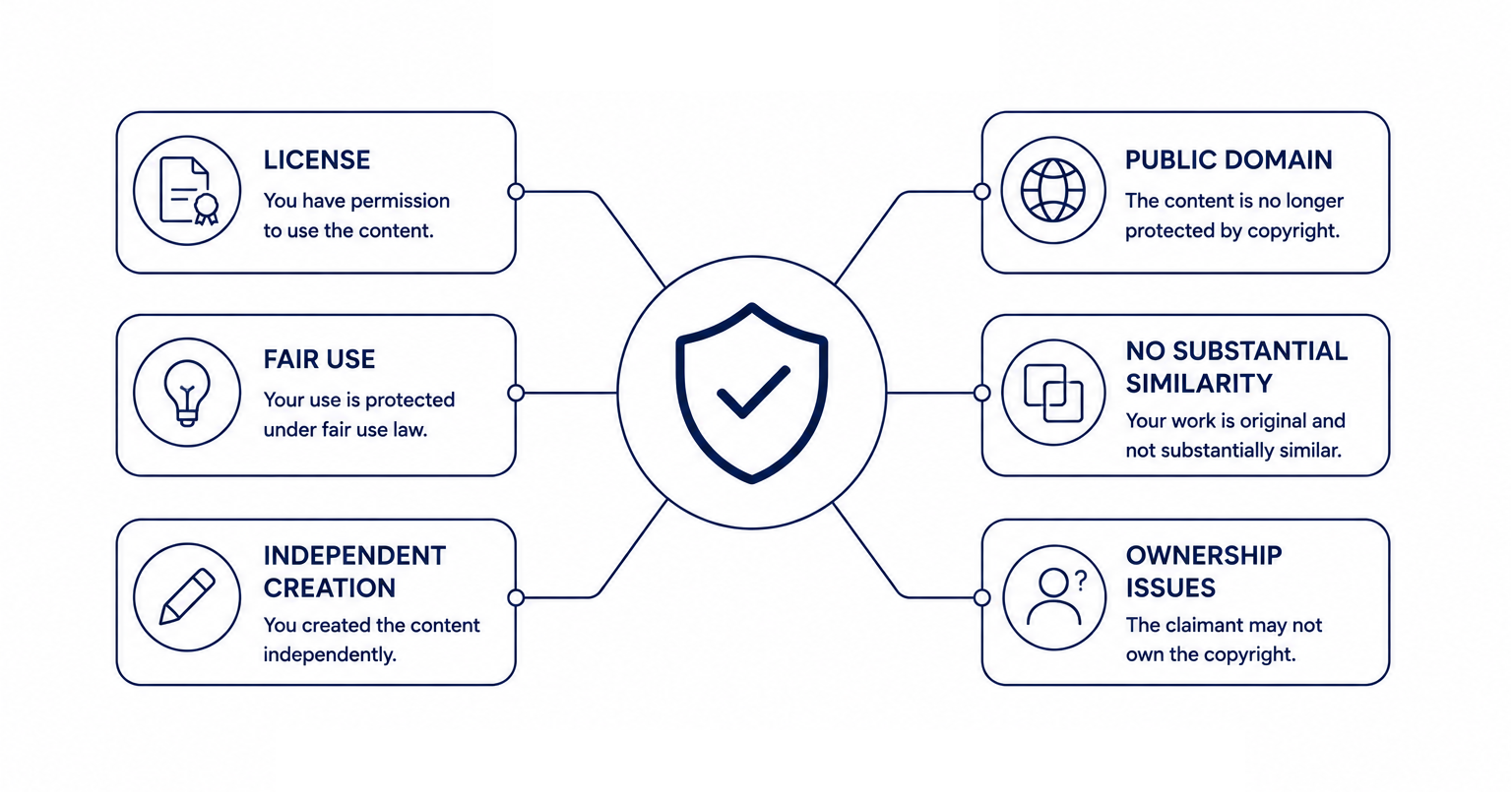
Not every accusation of copyright infringement is valid. A respondent may have defenses based on the facts, the work at issue, how the accused material was created, whether permission existed, and whether the claimant can prove ownership and copying.
Common defenses may include license or authorization, fair use, independent creation, public domain, lack of substantial similarity, unprotectable elements, ownership problems, registration issues, or damages limitations. The availability of any defense depends on the facts.
3. Why “No Copyright Infringement Is Intended” Is Not Enough
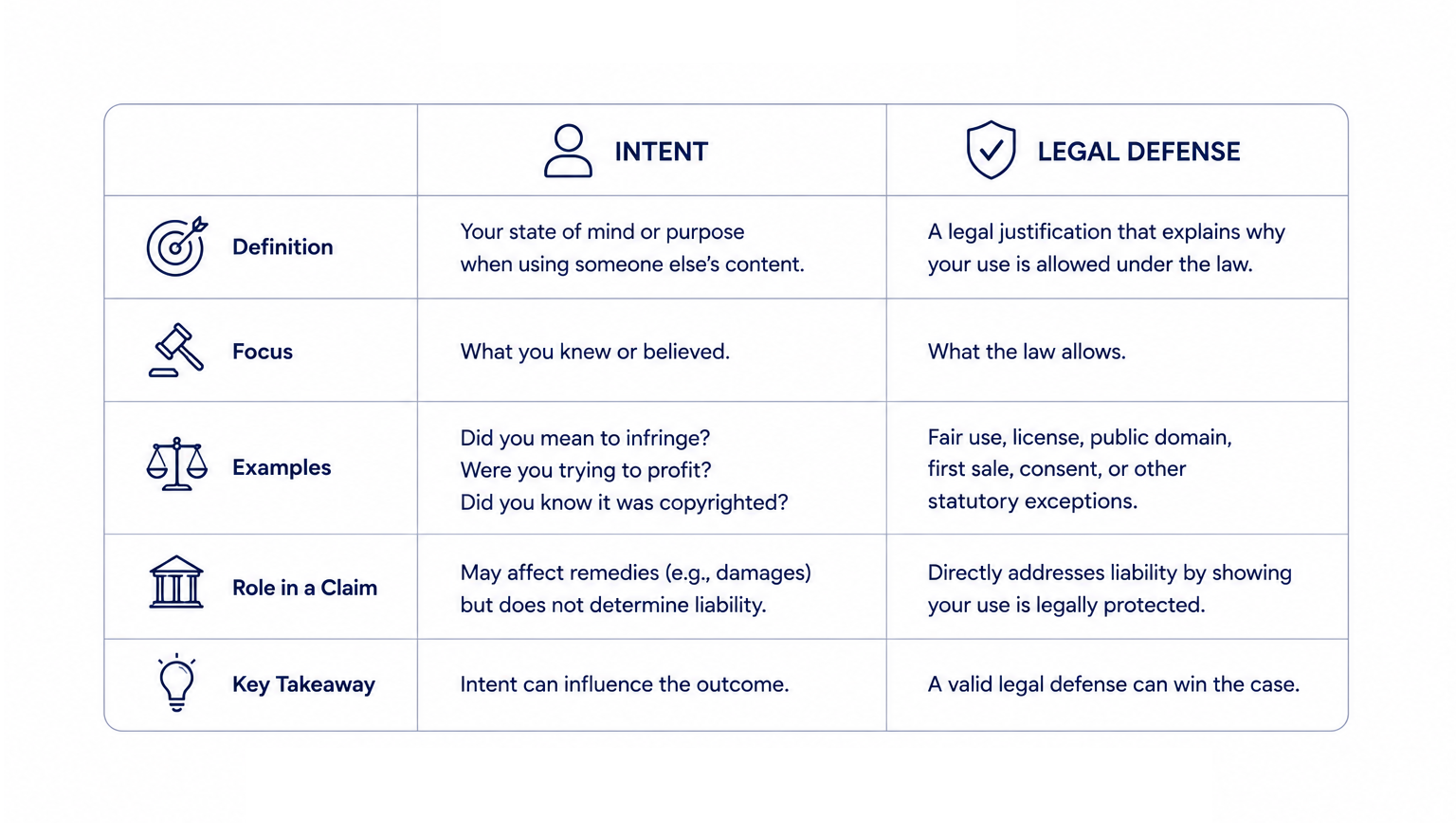
The phrase “no copyright infringement is intended” appears often online, but it is not a legal defense by itself. A person can infringe copyright even without bad intent if protected expression was copied without authorization and no defense applies.
Intent may matter in some parts of the damages analysis, but it does not replace the legal analysis. The stronger questions are whether the claimant owns protected rights, whether protected expression was copied, whether the use was authorized, whether fair use or another defense applies, and what damages can realistically be shown.
For that reason, a response should not rely on disclaimers or emotional explanations. It should be built around evidence, legal defenses, and a clear procedural strategy.
4. Evidence That Can Support a Defense
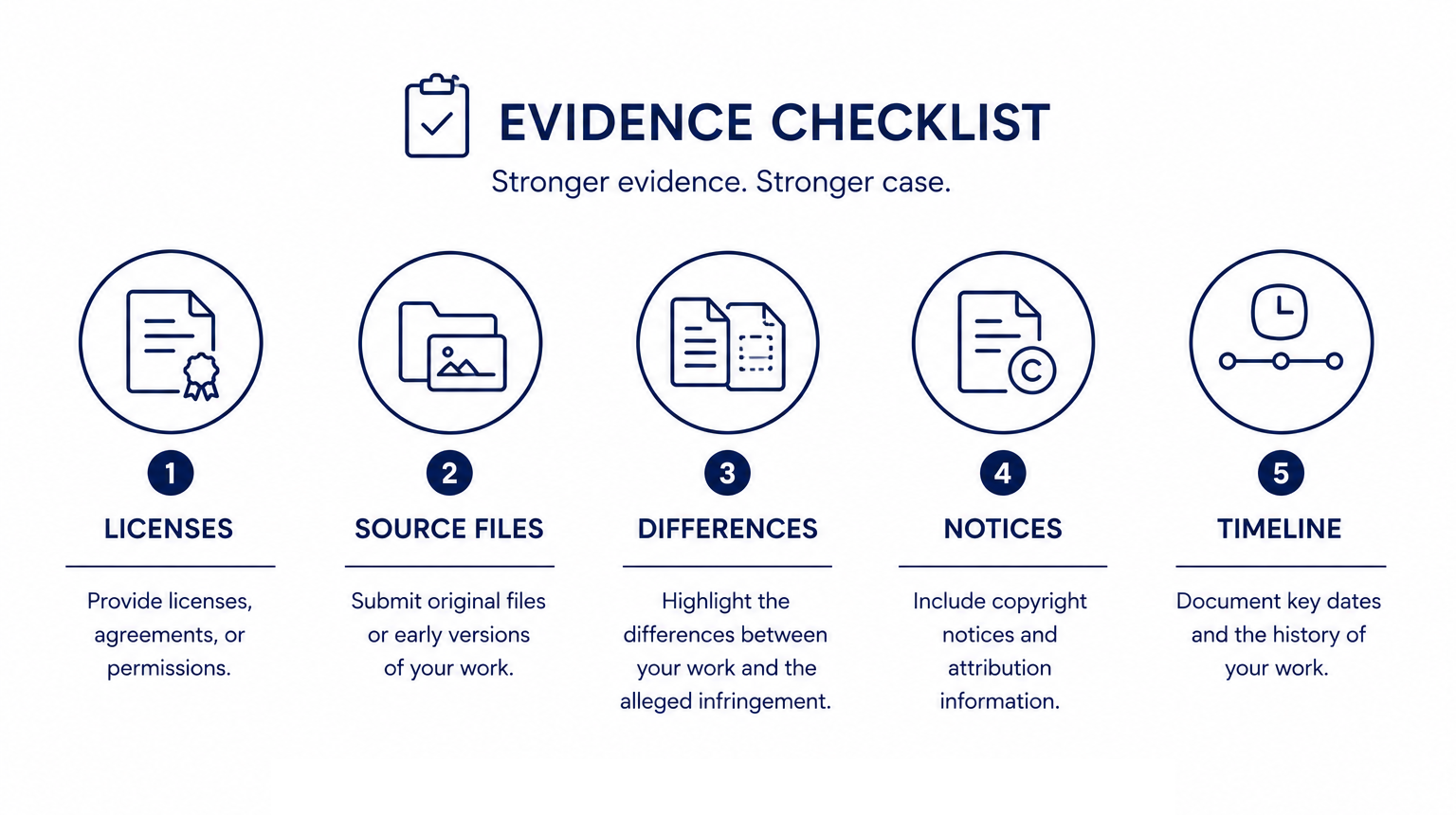
A copyright defense is stronger when it is supported by documents. Respondents should preserve relevant evidence instead of deleting files, changing pages, or making admissions before understanding the claim.
Useful evidence may include licenses, contracts, invoices, stock image receipts, assignment records, emails, source files, drafts, metadata, screenshots, URLs, archived pages, platform notices, DMCA communications, vendor records, and proof that the accused use was removed or modified.
The goal is to create a clear factual record. That record can help determine whether the matter should be defended, settled, resolved through the CCB, or handled in another forum.
5. CCB Defense Strategy and Opt-Out Decisions
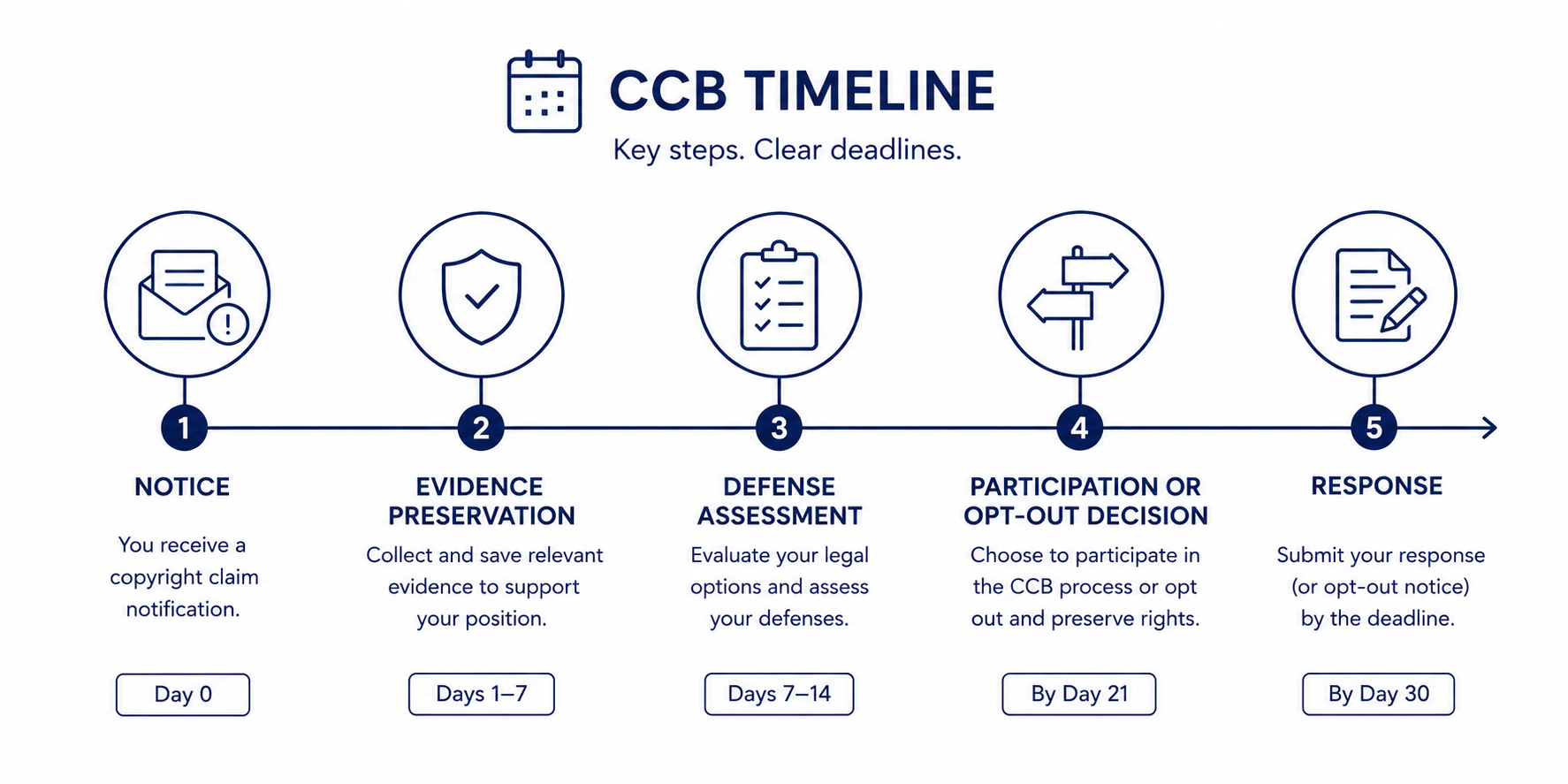
If a respondent receives notice of a CCB claim, the response strategy should begin immediately. A CCB claim is not the same as an informal demand letter. Deadlines, service, opt-out rights, and response obligations may affect the path forward.
In many CCB matters, a respondent has a limited period to decide whether to participate or opt out. If the respondent participates, they may need to dispute facts, raise defenses, submit evidence, and tell their side of the story. If the respondent opts out, the CCB proceeding may end, but the claimant may still consider federal court or settlement options.
The decision should be based on exposure, defenses, evidence, damages, business risk, settlement posture, and whether the dispute belongs in the CCB or another forum.
6. How Cohn Legal Can Help
You should consider speaking with a copyright lawyer if you received a copyright violation notice, CCB claim, DMCA communication, demand letter, or platform complaint. Legal guidance can help identify whether the accusation is valid, overstated, defensible, or better resolved through negotiation.
Cohn Legal, PLLC can help evaluate non-infringement arguments, fair use issues, license evidence, damages exposure, deadlines, opt-out strategy, settlement options, and whether the dispute should proceed through the CCB or another forum.
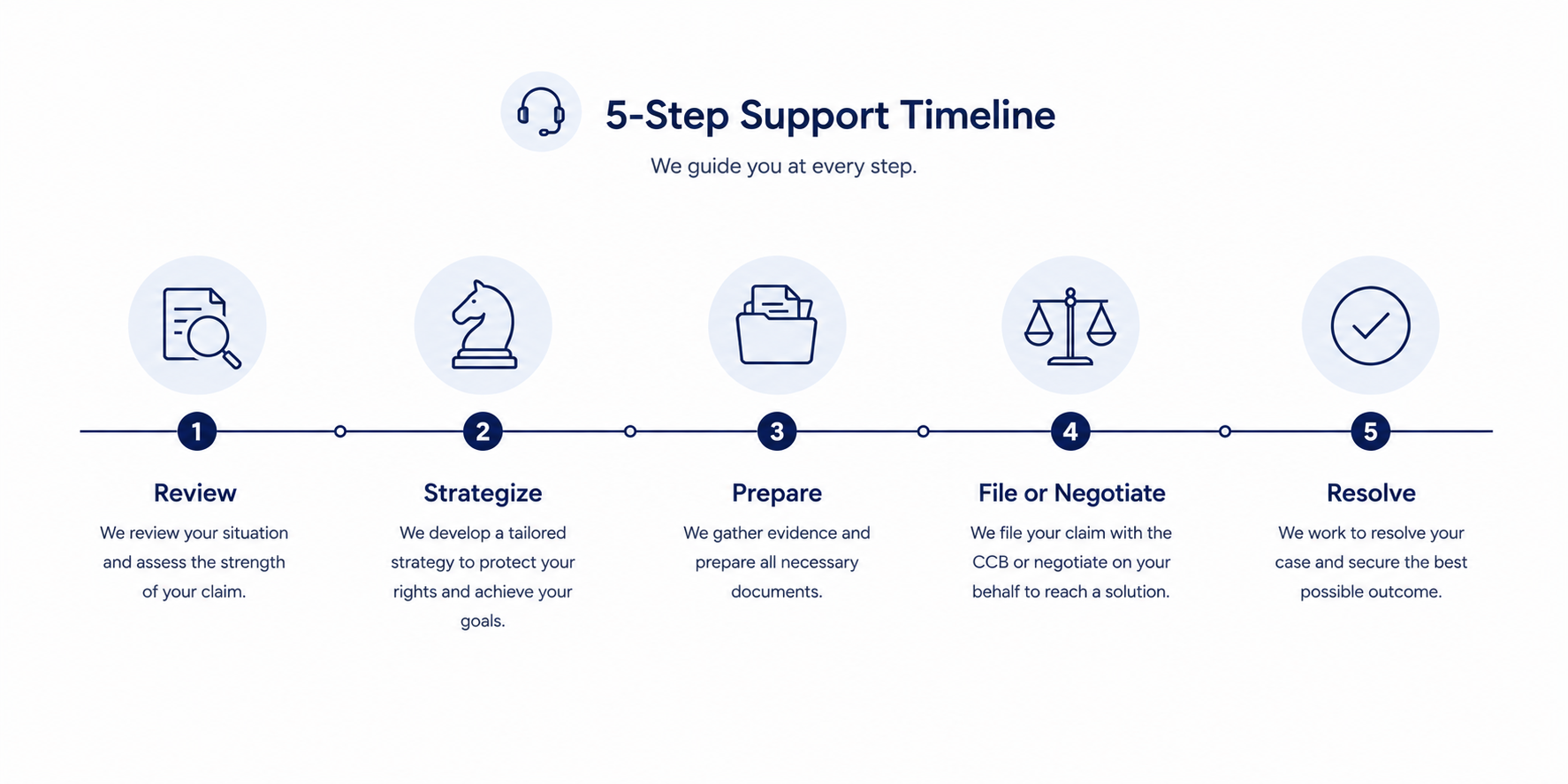
Cohn Legal can help review the claim, identify non-infringement arguments and copyright defenses, preserve evidence, evaluate damages and business risk, and prepare a response, negotiation strategy, or opt-out plan.
Non-Infringement and Copyright Defense Questions
Is non-infringement the same as fair use?
No. Non-infringement means the legal elements of infringement may not be satisfied. Fair use is a separate doctrine that may permit certain uses of copyrighted work under specific circumstances.
Is “no copyright infringement is intended” a defense?
No. That phrase alone is not a legal defense. Intent may affect certain damages issues, but the defense should focus on copyright ownership, protected expression, authorization, fair use, and evidence.
Can a license defeat a copyright infringement claim?
A valid license or permission can be a strong defense if the accused use falls within the scope of the authorization and the evidence supports it.
What evidence should I preserve after receiving a claim?
Preserve licenses, contracts, invoices, emails, source files, screenshots, URLs, platform notices, DMCA communications, and any records showing how the work was created or sourced.
Can I opt out of a CCB claim?
In many cases, respondents have a limited window to opt out of a CCB proceeding. The decision should be made carefully because opting out may not end the broader dispute.
Should I respond to a copyright claim on my own?
Some matters may appear simple but involve deadlines, damages, admissions, and strategic choices. Speaking with a copyright lawyer can help avoid unnecessary risk.
Defend Copyright Claims With a Clear Strategy
A copyright accusation should not be ignored, but it should also not be answered carelessly. Non-infringement and copyright defenses require facts, documents, deadlines, and a strategy that fits the forum.
Whether you are responding to a CCB claim, evaluating a demand letter, reviewing a DMCA notice, or deciding whether to negotiate or opt out, Cohn Legal, PLLC can help you understand your options and move forward with confidence.