


Responding to a Copyright Violation Notice
A practical guide for recipients of copyright violation notices, Copyright Claims Board claims, DMCA takedown notices, and copyright demand letters.
1.
What a Copyright Violation Notice Means
↓
2.
First Steps After Receiving a Notice
↓
3.
CCB Claim, DMCA Notice, or Demand Letter?
↓
1. What a Copyright Violation Notice Means
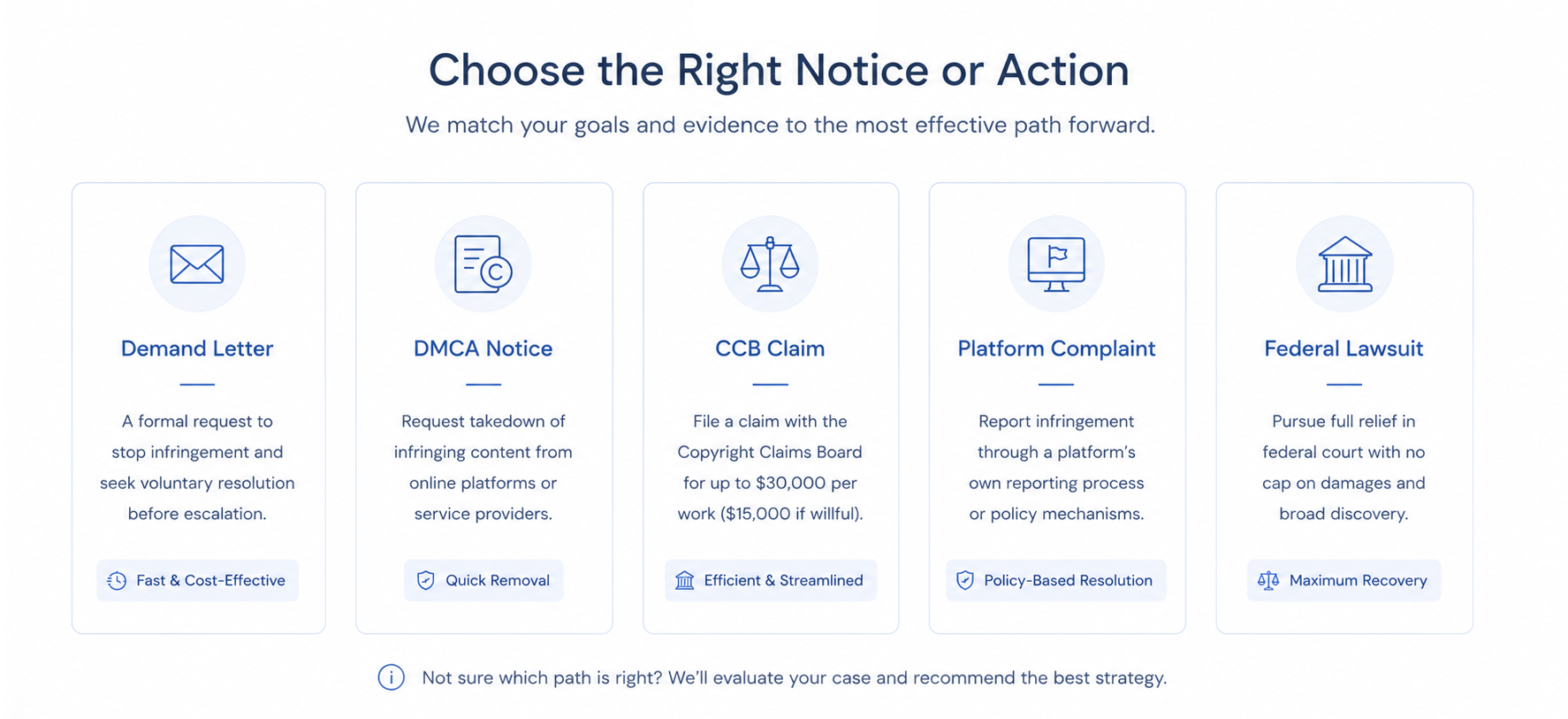
A copyright violation notice is a communication claiming that copyrighted material has been used without permission. The notice may be informal, such as an email or demand letter, or it may be connected to a more formal process, such as a DMCA takedown notice, a Copyright Claims Board proceeding, or a federal lawsuit for copyright infringement.
The first issue is identifying what kind of notice you received. A private demand letter may be focused on settlement. A DMCA notice may be focused on online removal. A CCB notice may trigger a formal response or opt-out decision. A court complaint may involve strict litigation deadlines.
A notice should not be ignored just because the claim seems exaggerated, confusing, or unfair. It should be reviewed carefully before responding, removing content, making admissions, paying money, or filing a counter-notice.
2. First Steps After Receiving a Notice
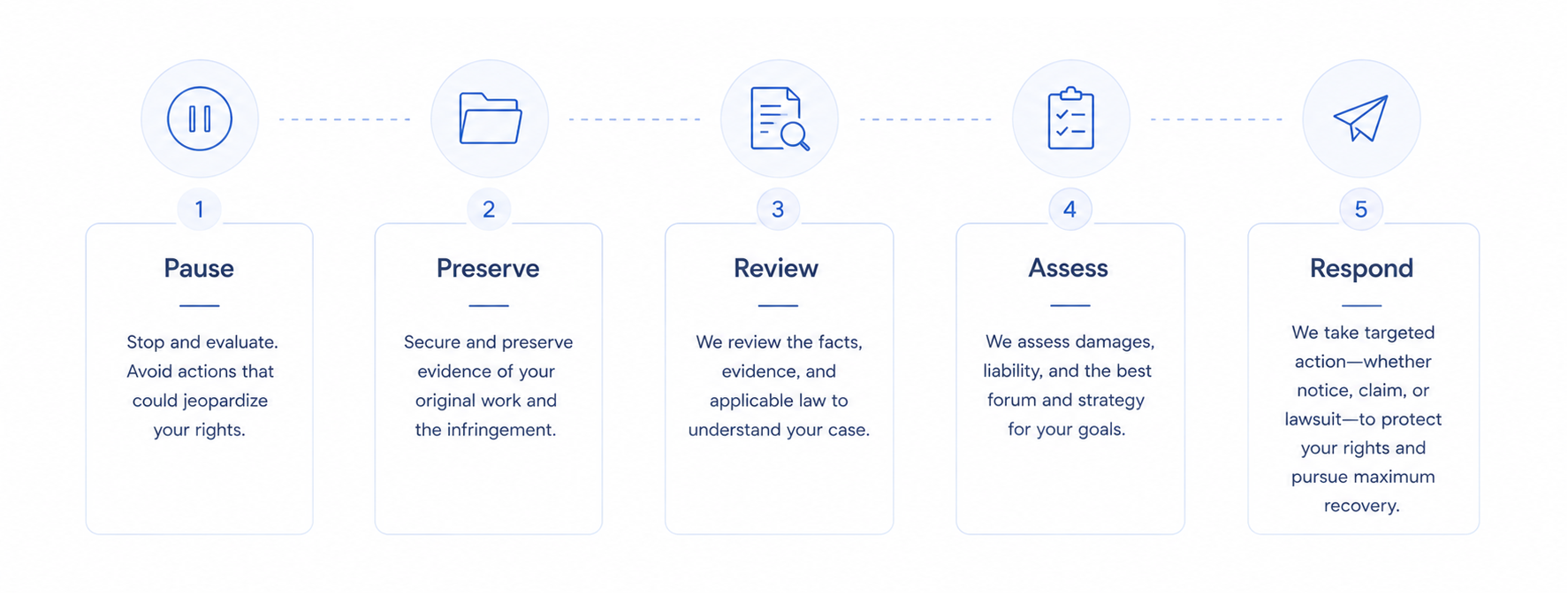
The best first response is usually not an emotional reply. It is a controlled review. Before admitting liability, paying a demand, filing a counter-notice, or accusing the other side of bad faith, the recipient should slow the situation down and preserve the facts.
Key first steps include identifying the deadline, saving the notice, preserving screenshots and files, reviewing the source of the content, checking for licenses or permissions, and determining whether the claimant appears to own the rights being asserted.
A business should also identify who created, uploaded, purchased, or approved the disputed content. Copyright violation notices often arise from ordinary marketing activity, vendor work, image sourcing, website updates, product listings, or social media posts.
3. CCB Claim, DMCA Notice, or Demand Letter?
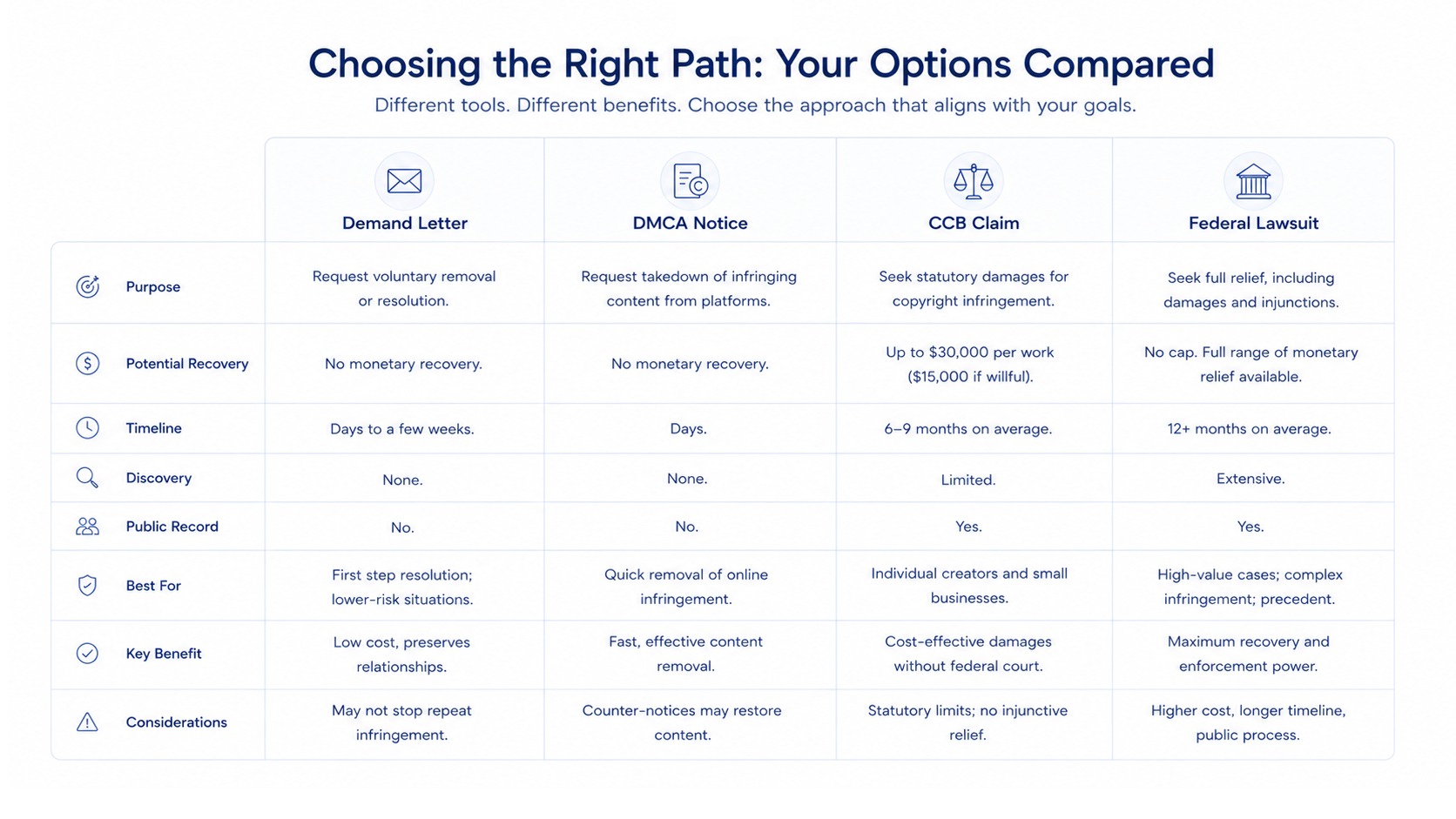
Different copyright notices require different strategies. A private demand letter, DMCA takedown notice, CCB claim, and federal lawsuit can all involve copyright issues, but they do not operate the same way.
A DMCA notice is often focused on online removal. A CCB claim is a formal proceeding before the Copyright Claims Board. A private demand letter may be an attempt to settle before any formal filing. A federal lawsuit is litigation in court and usually requires a more formal defense strategy.
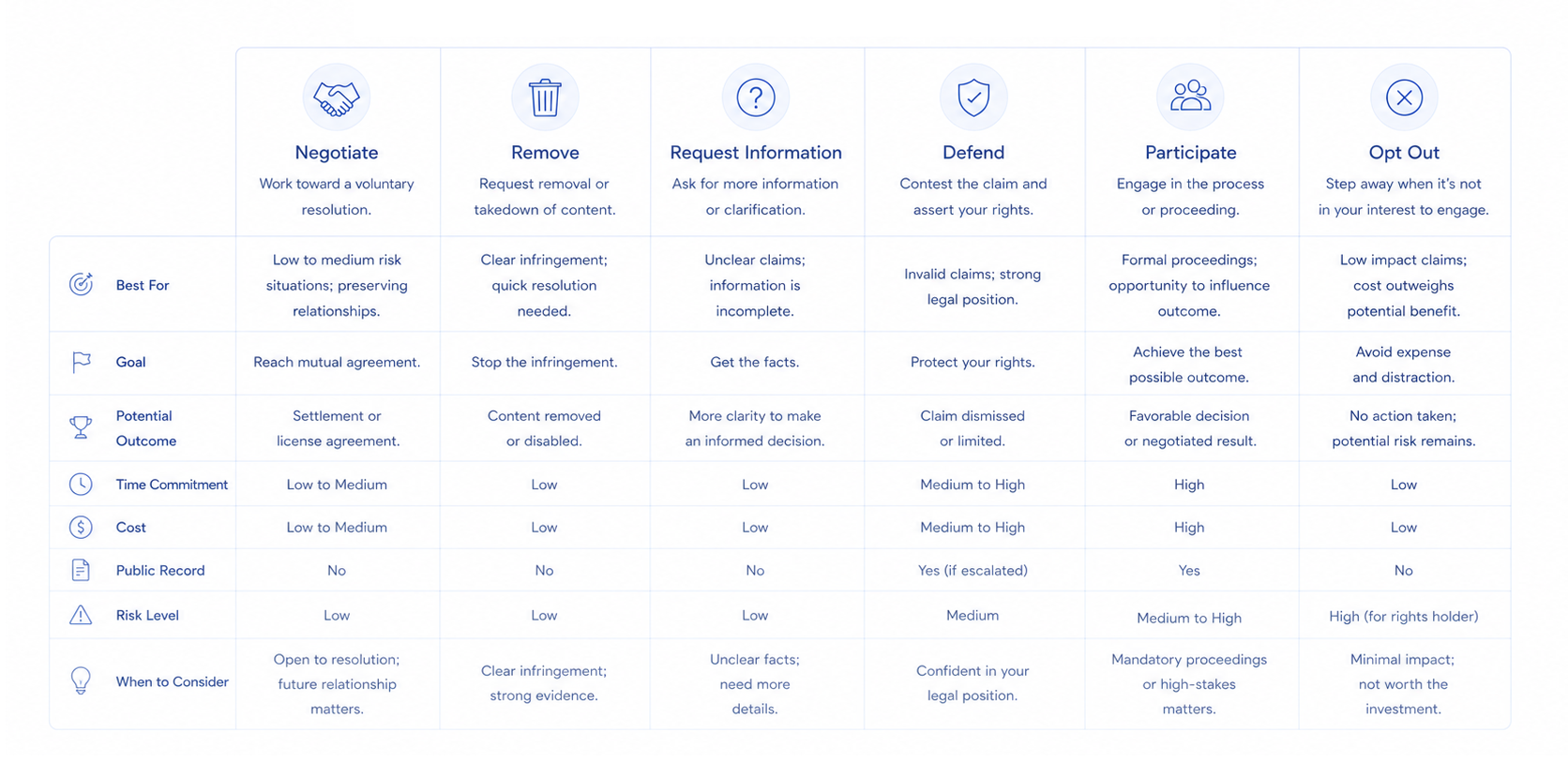
If the notice relates to the Copyright Claims Board, the respondent may have a limited period to decide whether to participate or opt out. That decision should be made based on the strength of the claim, available defenses, damages, costs, and whether the claimant may pursue the dispute in federal court if the respondent opts out.
4. Response Options and Strategy
There is no single correct response to every copyright violation notice. The right strategy depends on the facts, the evidence, the deadline, the value of the dispute, the strength of the defenses, and the business consequences of escalation.
Some matters may be resolved through a negotiated settlement, content removal, a retroactive license, or a carefully written response. Other matters may require a stronger defense, CCB participation, an opt-out decision, or preparation for federal litigation.
The response should be measured and documented. It should avoid unnecessary admissions, preserve settlement options, and position the recipient for the next procedural step.
5. Common Mistakes to Avoid
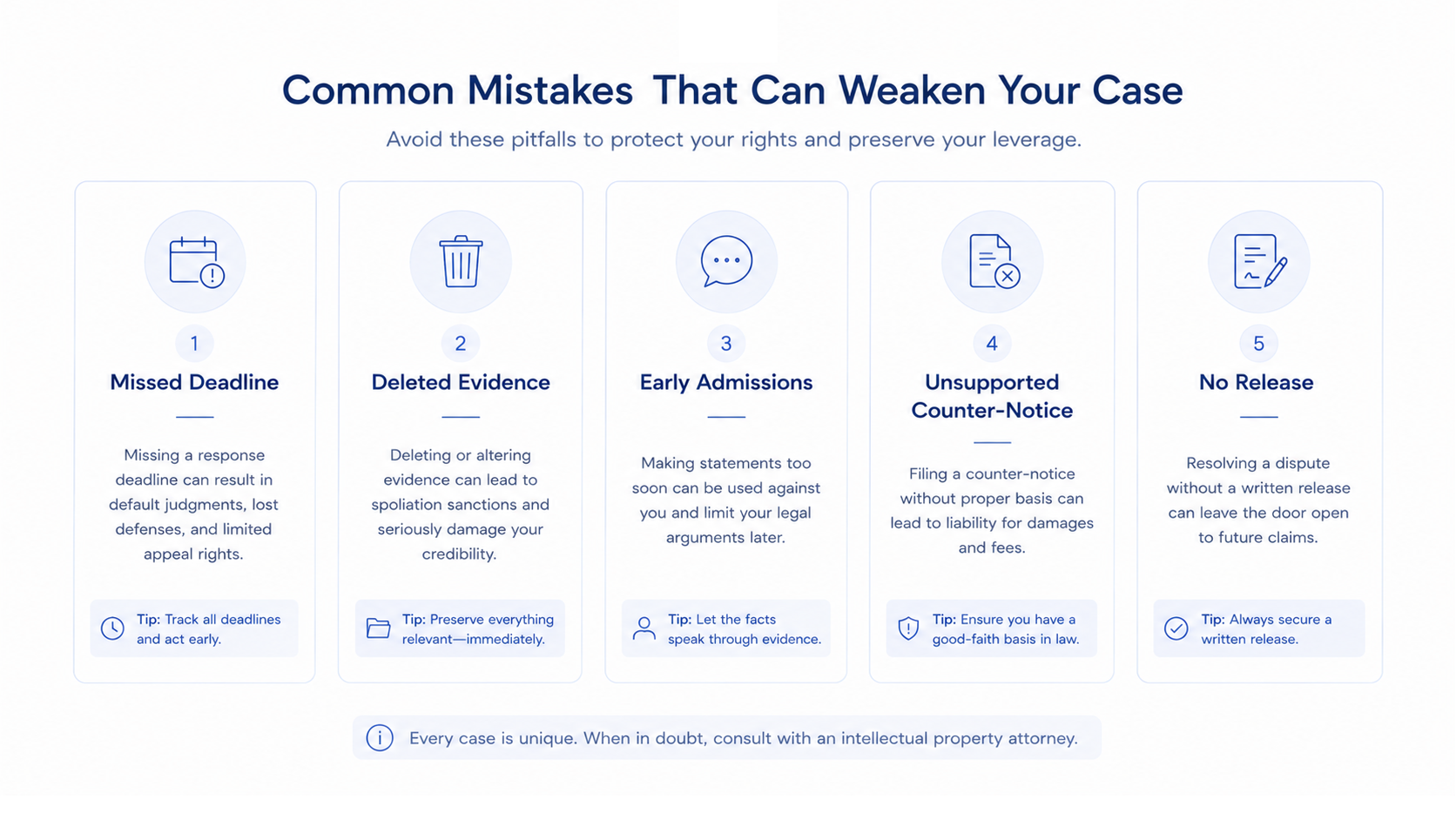
Many copyright disputes become more expensive because the recipient reacts too quickly or too casually. Even when the claim is weak, the response should be handled carefully.
One common mistake is assuming that lack of intent ends the matter. Saying “no copyright infringement is intended” is not a legal defense by itself. Another mistake is deleting content, emails, licenses, or website records that may later become important evidence.
Businesses should also avoid making admissions before understanding the facts. An apology, explanation, or informal email can create problems if it is not carefully framed.
6. How Cohn Legal Can Help
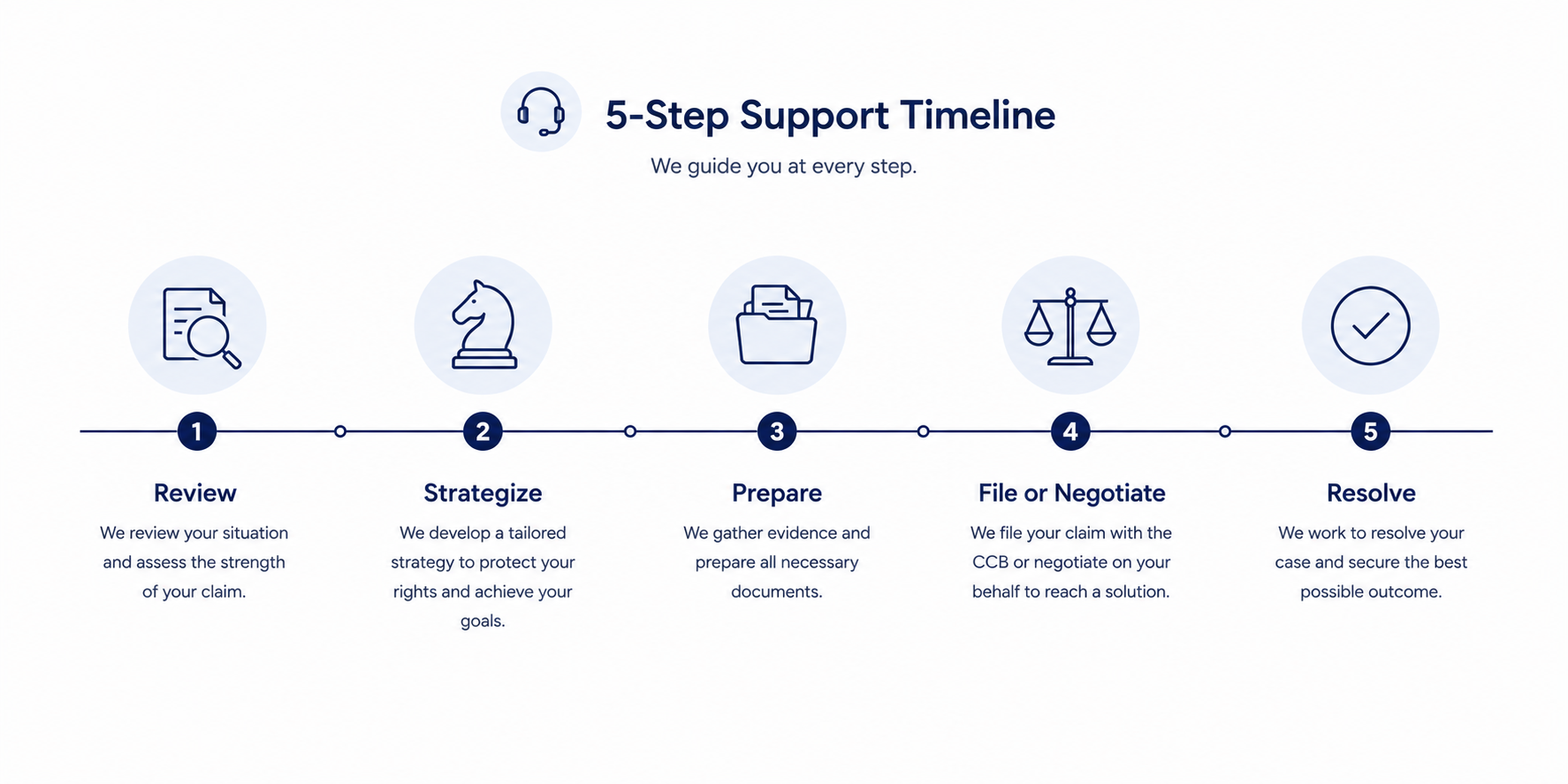
Cohn Legal, PLLC can help recipients of copyright violation notices evaluate the claim, identify deadlines, assess defenses, preserve evidence, and choose a response strategy. The goal is not simply to reply. The goal is to protect the client’s position before the dispute escalates.
Legal guidance can be especially valuable when the notice involves a CCB claim, DMCA takedown, settlement demand, platform complaint, federal lawsuit threat, uncertain ownership, unclear registration status, or disputed damages.
If the matter can be resolved efficiently, the firm can help negotiate practical settlement terms. If the claim is weak or overstated, the firm can help prepare a stronger response. If the notice is connected to the Copyright Claims Board, the firm can help evaluate whether to participate, opt out, defend, counterclaim, or negotiate.
Copyright Violation Notice Questions
Is a copyright violation notice the same as a CCB claim?
No. A copyright violation notice may be a private demand, platform notice, DMCA notice, CCB claim, or court filing. The type of notice determines the response strategy.
What should I do first after receiving a copyright violation notice?
Preserve the notice and related evidence, identify any deadline, avoid admissions, and review whether the claimant owns the rights being asserted.
Should I remove the content immediately?
It depends. Removing content may reduce ongoing risk in some situations, but records should be preserved first and the response should avoid unnecessary admissions.
Can I ignore a Copyright Claims Board notice?
Ignoring a CCB notice can create unnecessary risk. A respondent should understand the deadline and decide whether to participate, negotiate, defend, or opt out.
Is “no copyright infringement is intended” a defense?
No. That phrase alone is not a legal defense. The better question is whether protected expression was copied without authorization and whether a defense applies.
Is a DMCA counter-notice safe to file?
A counter-notice can have legal consequences and may escalate the dispute. It should be evaluated before being submitted.
Respond Before the Deadline Becomes the Problem
A copyright violation notice should be handled carefully, whether it arrives as a demand letter, DMCA notice, platform complaint, Copyright Claims Board claim, or lawsuit threat. The right response can reduce risk, preserve defenses, and create room for a practical resolution.
Cohn Legal, PLLC can help you understand the claim, evaluate your options, and respond with a strategy that fits the facts and business stakes.