


What Is the Copyright Claims Board?
A practical guide to understanding the Copyright Claims Board, the types of copyright disputes it can resolve, and when it may be a streamlined alternative to a lawsuit for copyright infringement.
1.
What Is the Copyright Claims Board?
↓
2.
What Claims Can the CCB Handle?
↓
3.
Who Uses the Copyright Claims Board?
↓
4.
CCB vs. Federal Copyright Court
↓
1. What Is the Copyright Claims Board?
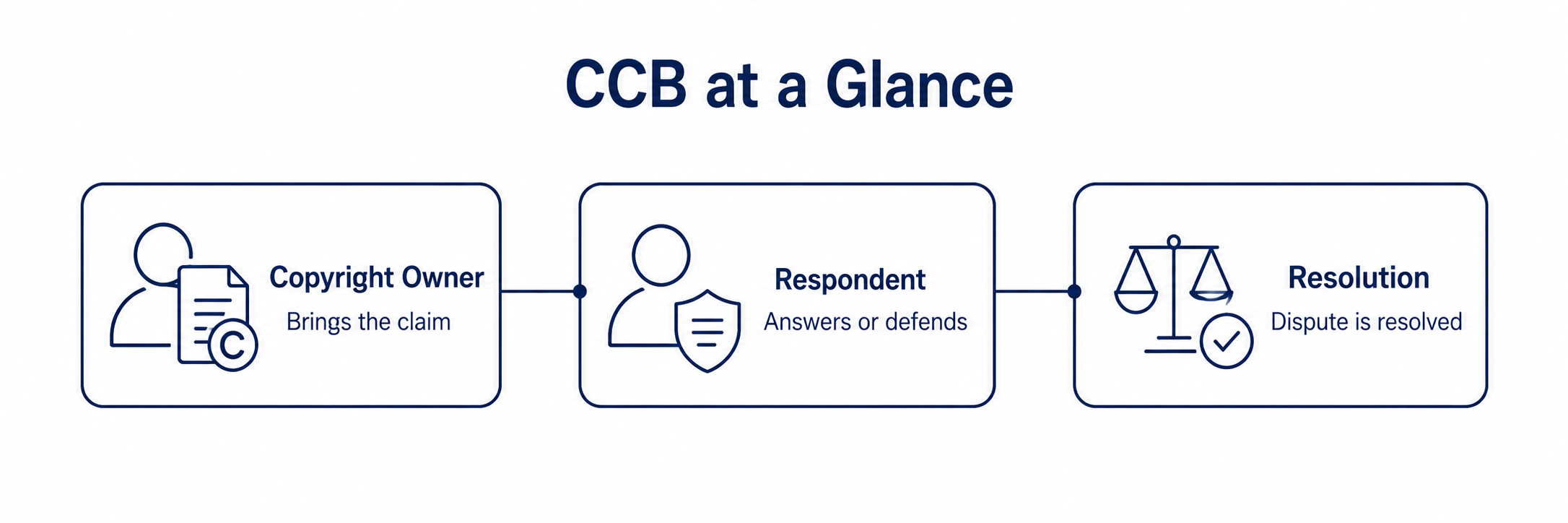
The Copyright Claims Board, commonly abbreviated as the CCB, is a tribunal within the U.S. Copyright Office that handles certain lower-value copyright disputes. It is not the same as a federal court, but it can provide an alternative forum for qualifying copyright claims.
People often search for it as the copyright claim board or copyright small claims court. The official name is the Copyright Claims Board.
The CCB can be relevant when a copyright dispute is serious enough to require formal action but may not justify the time, cost, and complexity of a full federal lawsuit for copyright infringement. It may give copyright owners and respondents a more streamlined way to resolve certain disputes.
2. What Claims Can the CCB Handle?
The Copyright Claims Board can hear certain categories of copyright disputes. These may include eligible copyright infringement claims, claims seeking a declaration of non-infringement, and certain misrepresentation claims connected to DMCA takedown notices or counter-notices.
A copyright infringement claim may involve the unauthorized use of protected work, such as copied photos, artwork, videos, written content, product images, software, or other creative assets.
A non-infringement claim may be relevant when a party wants a determination that its conduct does not violate the claimant’s copyright rights.
Certain DMCA-related claims may arise when a party alleges that a takedown notice or counter-notice included a misrepresentation.
3. Who Uses the Copyright Claims Board?
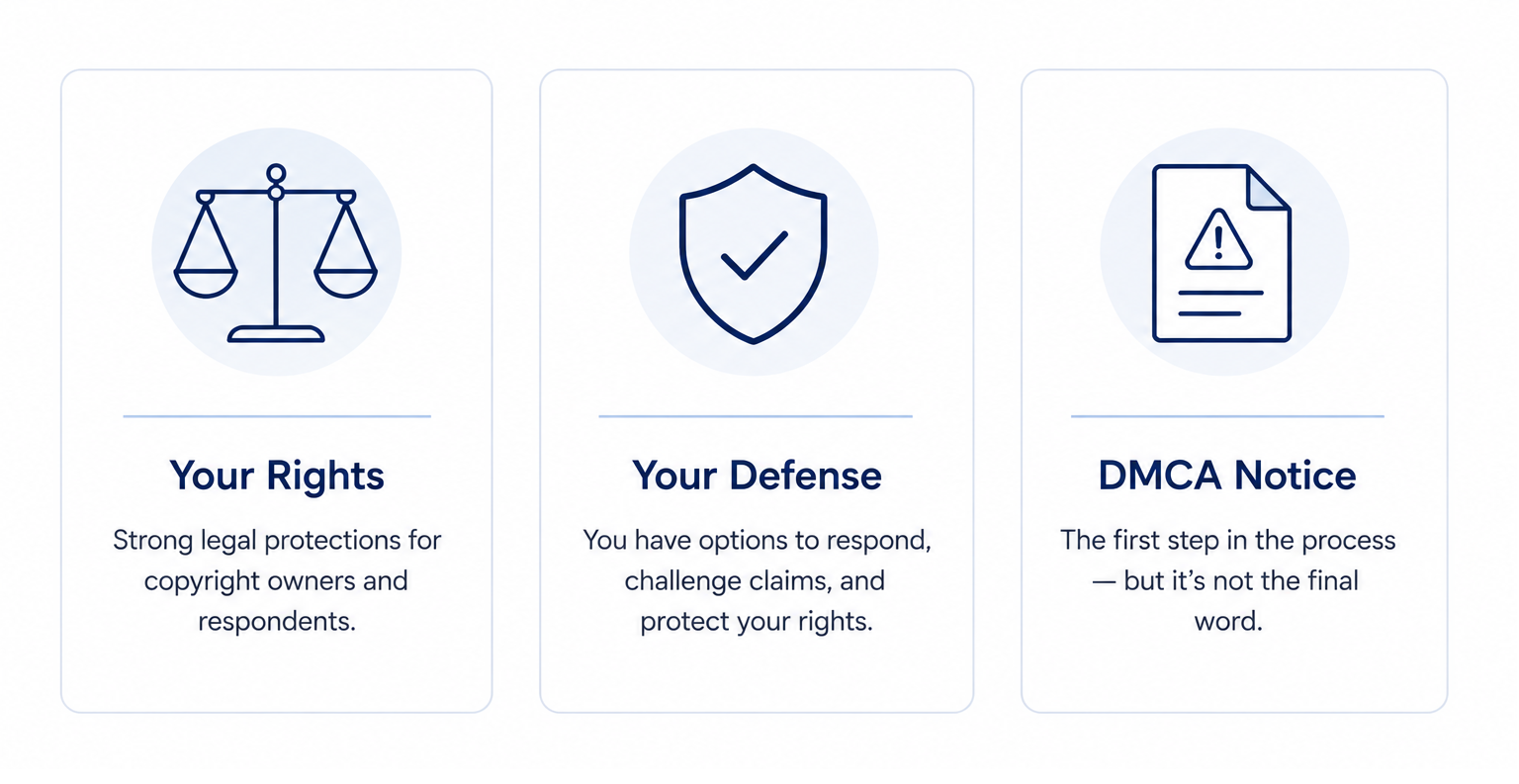
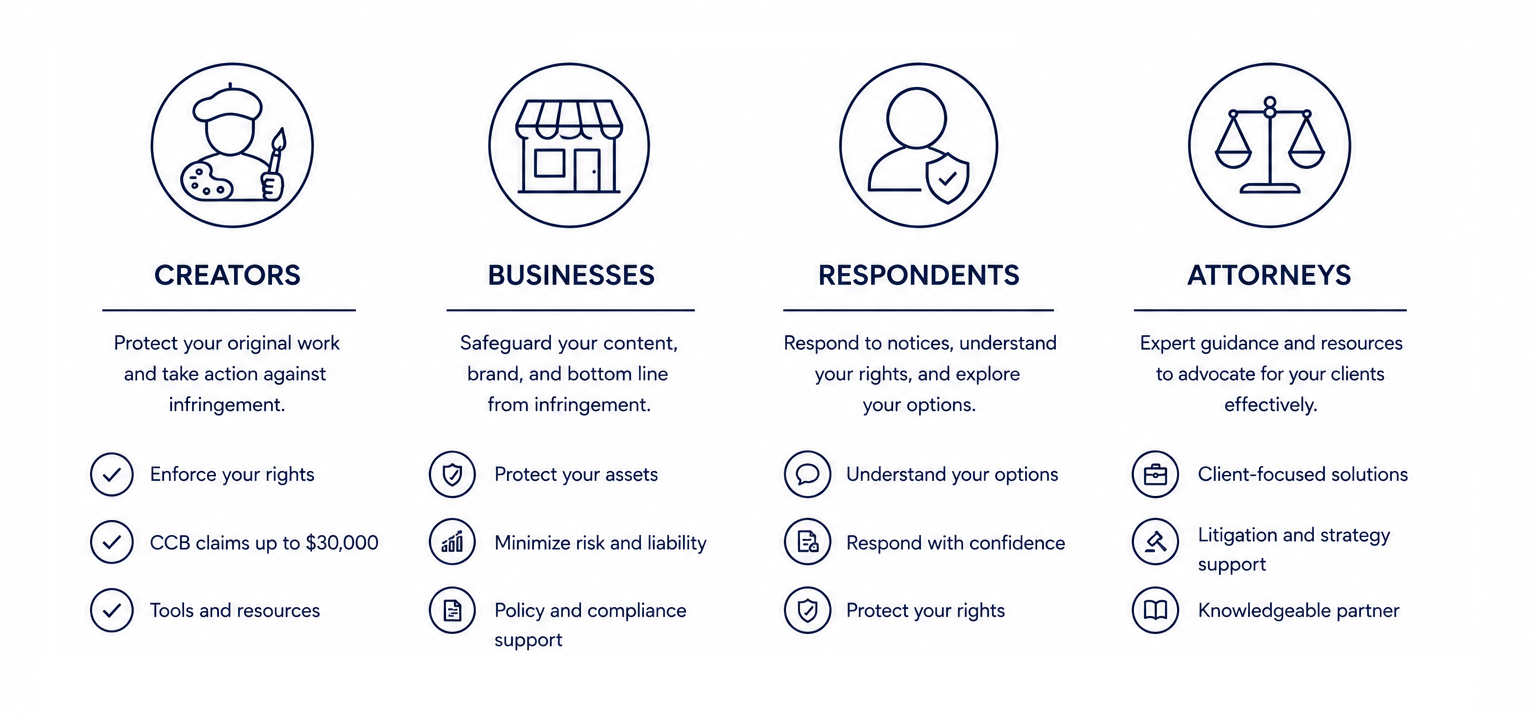
The CCB may be relevant to both sides of a copyright dispute.
Copyright owners may consider the CCB when their work has been copied, posted, sold, displayed, or reused without permission. This can include creators, photographers, artists, designers, writers, agencies, online businesses, software developers, and brand owners.
Respondents may encounter the CCB after receiving a claim, notice, demand, or legal filing. A respondent may be an individual, small business, online seller, marketing agency, website owner, or company accused of using protected content without authorization.
The CCB can also matter for marketplace and online content disputes, including cases where images, listings, product descriptions, packaging artwork, or creative content are copied or used without permission.
4. CCB vs. Federal Copyright Court
The Copyright Claims Board is different from federal court.
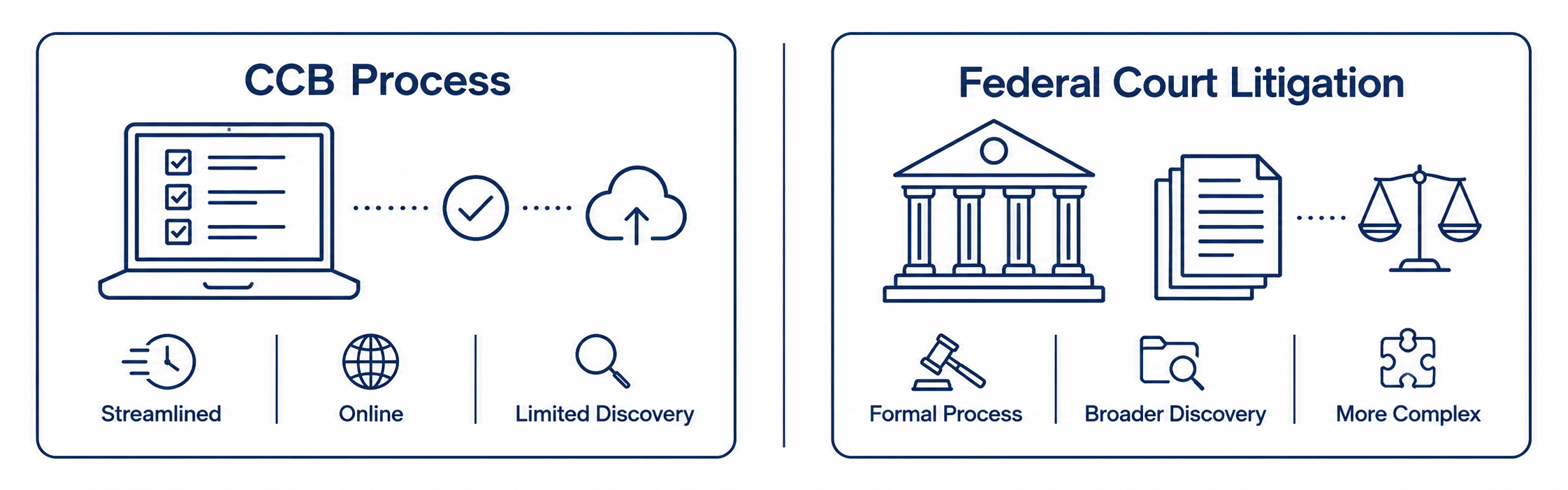
A lawsuit for copyright infringement is usually filed in federal court. Federal litigation can involve formal pleadings, motions, discovery, court conferences, expert evidence, and potentially trial. It may be appropriate for higher-value disputes, complex claims, urgent relief, or matters involving significant business consequences.
The CCB is designed to be more streamlined. It is generally less formal, more limited, and intended for certain lower-value disputes. The process may be more accessible, but it also comes with tradeoffs, including capped damages and more limited procedures.
5. Benefits and Limits of the CCB
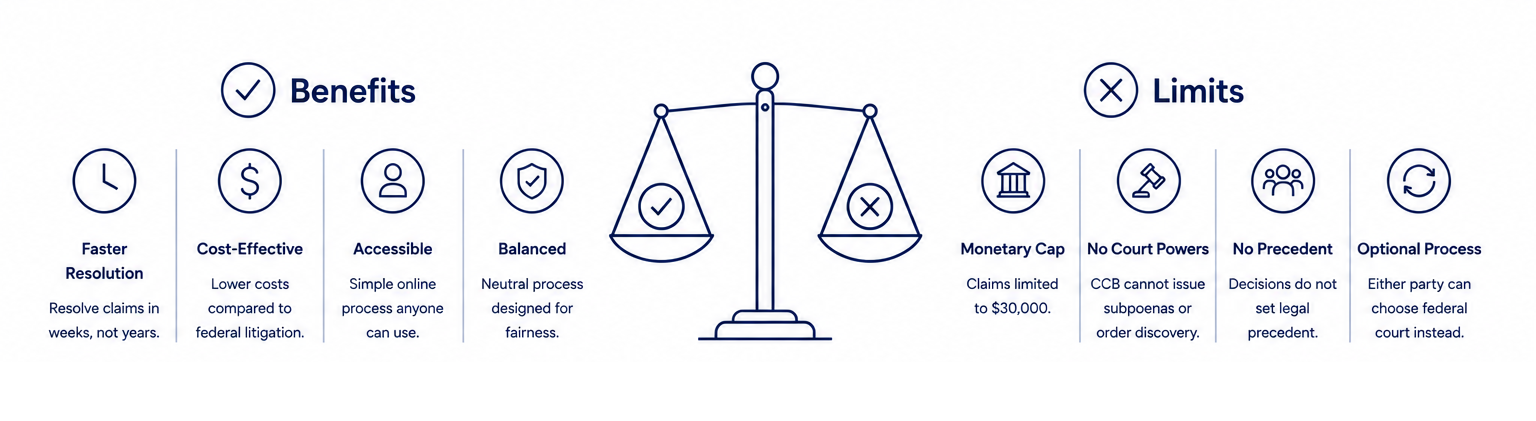
The CCB may be useful because it can offer a more efficient way to resolve certain copyright disputes. It may reduce procedural burden, create formal pressure, and provide a path toward compensation when federal court is not practical.
However, the CCB is not right for every dispute. It has limits. Damages are capped. Procedures are more limited. Some matters may require broader discovery, stronger injunctive relief, or the tools available only in federal court.
The strategic question is not simply whether the CCB is faster. The better question is whether the CCB gives you the strongest position based on the facts, evidence, damages, and business goals.
6. How Cohn Legal Can Help
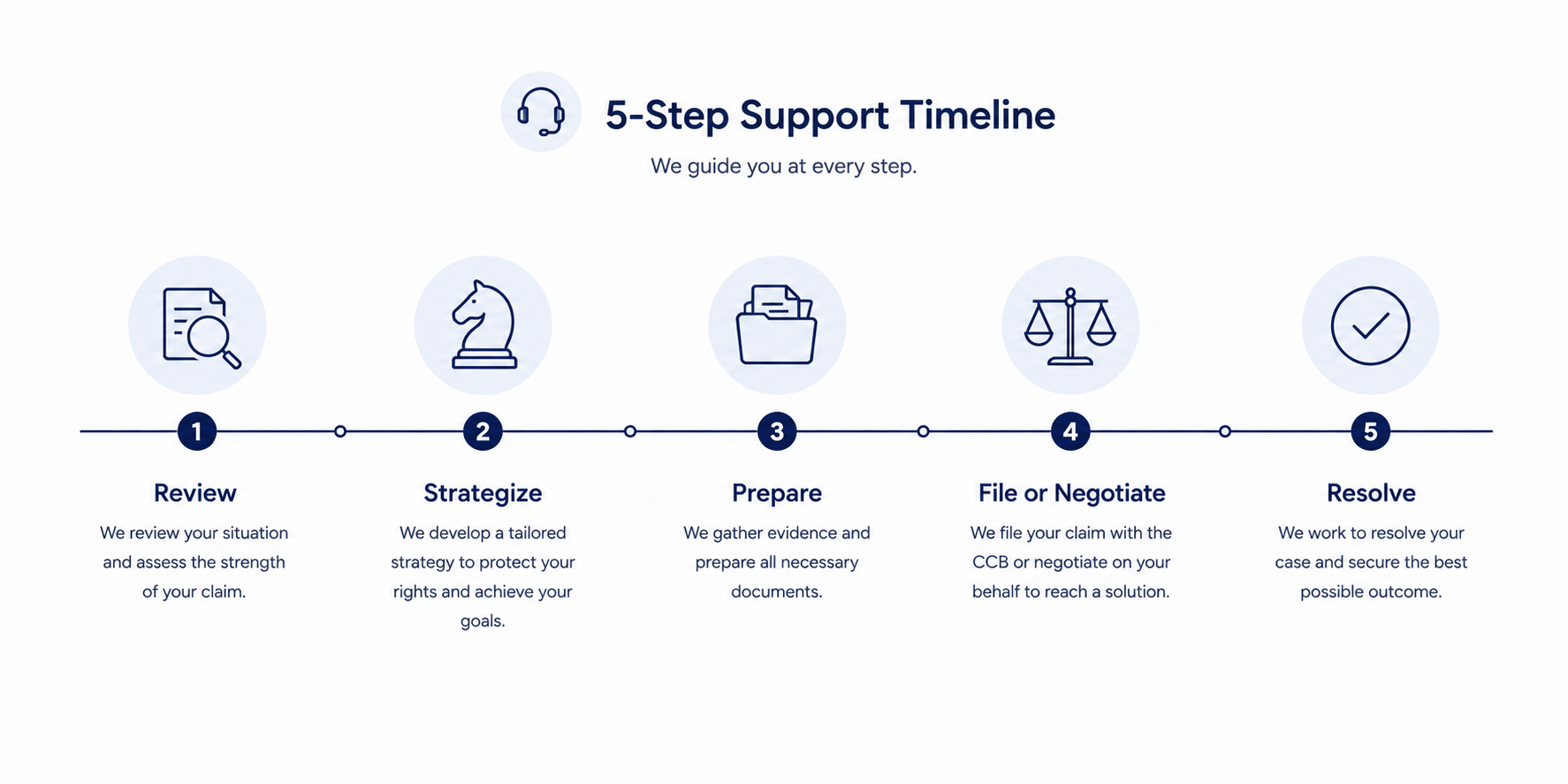
You should consider speaking with a copyright lawyer if your work has been copied, you received a copyright violation notice, you are considering a CCB claim, or you need to decide whether to respond, participate, negotiate, or opt out.
Legal guidance can be especially important when damages are unclear, registration timing matters, ownership is disputed, fair use may apply, the claim involves a DMCA notice, or federal litigation is a possibility.
If you are searching for a copyright infringement lawyer near me, the more important question is whether the attorney understands copyright enforcement strategy, CCB proceedings, DMCA issues, damages, and practical dispute resolution.
Copyright Claims Board Questions
Is the Copyright Claims Board the same as the copyright claim board?
Many people search for “copyright claim board,” but the official name is the Copyright Claims Board.
Is the CCB a court?
The CCB is not a federal court. It is a tribunal within the U.S. Copyright Office designed to resolve certain eligible copyright disputes.
What kinds of claims can the Copyright Claims Board hear?
The CCB may hear eligible copyright infringement claims, non-infringement claims, and certain DMCA-related misrepresentation claims.
Is the Copyright Claims Board always better than federal court?
No. The CCB may be useful for certain smaller disputes, but federal court may be better for higher-value, complex, or strategically important cases.
Can a respondent opt out of the CCB?
In many cases, respondents have a limited window to opt out. The decision should be made carefully because opting out may not end the dispute.
Should I speak with a copyright lawyer before using the CCB?
It is often helpful to speak with a copyright lawyer before filing, responding, opting out, negotiating, or relying on a CCB strategy.
Understand the Copyright Claims Board Before You Act
The Copyright Claims Board can be a useful forum for certain copyright disputes, but it should not be approached casually. Whether you are enforcing your rights, responding to a claim, evaluating damages, or deciding between the CCB and a federal lawsuit for copyright infringement, strategy matters.
Cohn Legal, PLLC can help you understand your options and choose the path that best fits your situation.