


TTAB Resource Center
Practical guidance on TTAB oppositions, cancellations, appeals, deadlines, evidence, discovery, motions, and trademark dispute strategy.
1.
What Is the TTAB?
↓
2.
Should You File or Respond to a TTAB Proceeding?
↓
3.
TTAB Oppositions, Cancellations, and Appeals
↓
4.
TTAB Process, Deadlines, and Filings
↓
5.
Step-by-Step TTAB Proceedings Guide
↓
6.
Evidence and Discovery Before the TTAB
↓
7.
Motions, Trial, and Written Advocacy
↓
The Complete Guide to Trademark Trial and Appeal Board Proceedings
The Trademark Trial and Appeal Board (TTAB) plays a central role in resolving disputes involving trademark applications and registrations. This resource center is designed to serve as a comprehensive TTAB proceedings guide, bringing together foundational concepts, procedural rules, and strategic insights in a single, organized location.
Whether you are considering initiating a TTAB action or responding to one, understanding how these proceedings work can have a direct impact on the strength, protection, and long-term value of your brand. The sections below are structured to guide you through TTAB practice step by step, from core principles to more advanced litigation strategies, so you can make informed decisions at every stage of the process.
Not every trademark dispute belongs in federal court. Some conflicts are best handled before the Trademark Trial and Appeal Board, especially when the central issue is whether a trademark application should register or whether an existing registration should remain on the federal register.
The TTAB handles oppositions, cancellations, and appeals from certain USPTO refusals. These proceedings can significantly affect brand protection, trademark clearance, enforcement leverage, and long-term business strategy. But TTAB proceedings are procedural, deadline-driven, and heavily dependent on written evidence and legal briefing.
Before filing or responding to a TTAB case, the key question is strategic: what result do you need, and is the TTAB the right forum to get there?
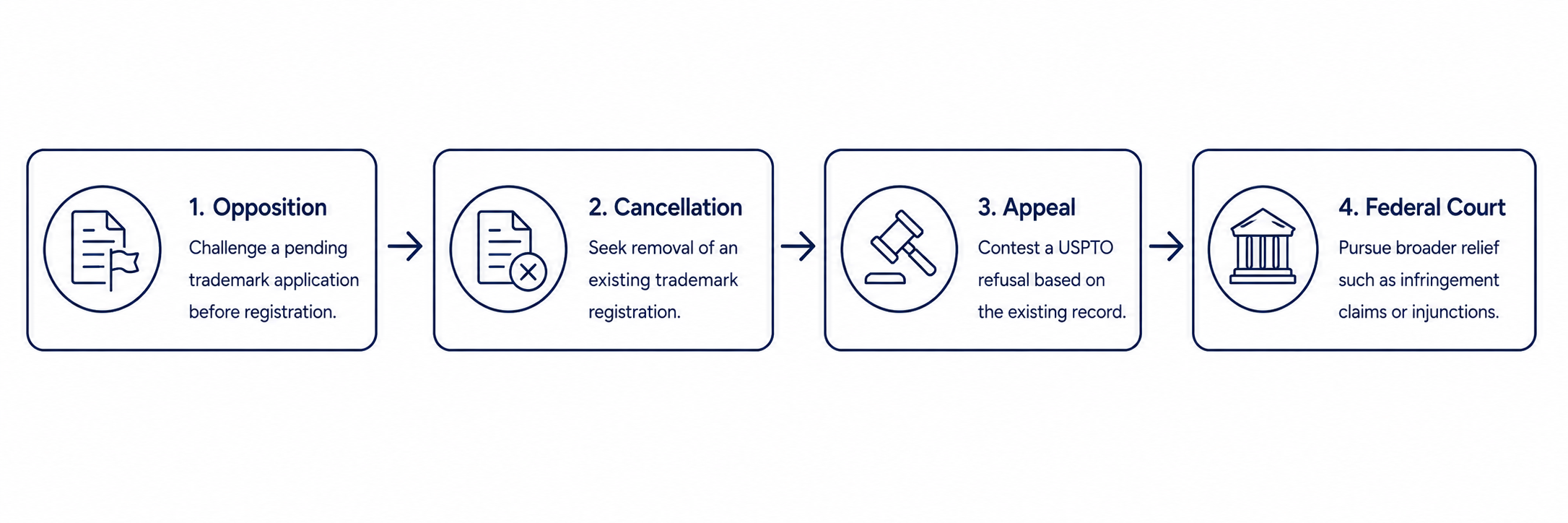
A TTAB proceeding may make sense when a trademark application threatens your brand, an existing registration blocks your business goals, or a USPTO refusal prevents your own mark from moving forward.
Oppositions are generally used to challenge pending applications before registration. Cancellations are used to challenge existing registrations. Appeals are used to contest certain refusals issued during the trademark application process.
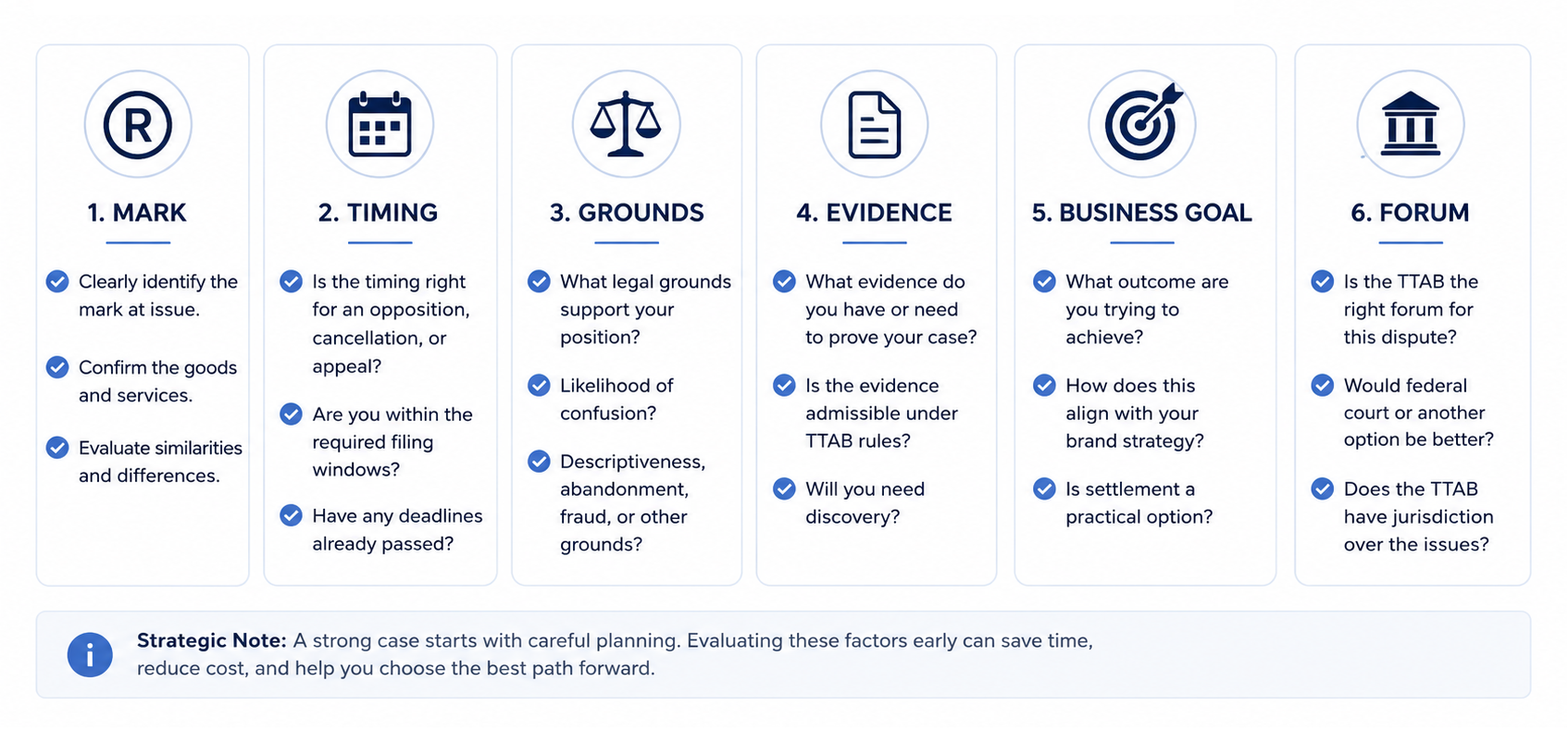
Before taking action, evaluate standing, timing, legal grounds, evidence, business objectives, cost, settlement potential, and whether a TTAB proceeding will actually solve the problem.
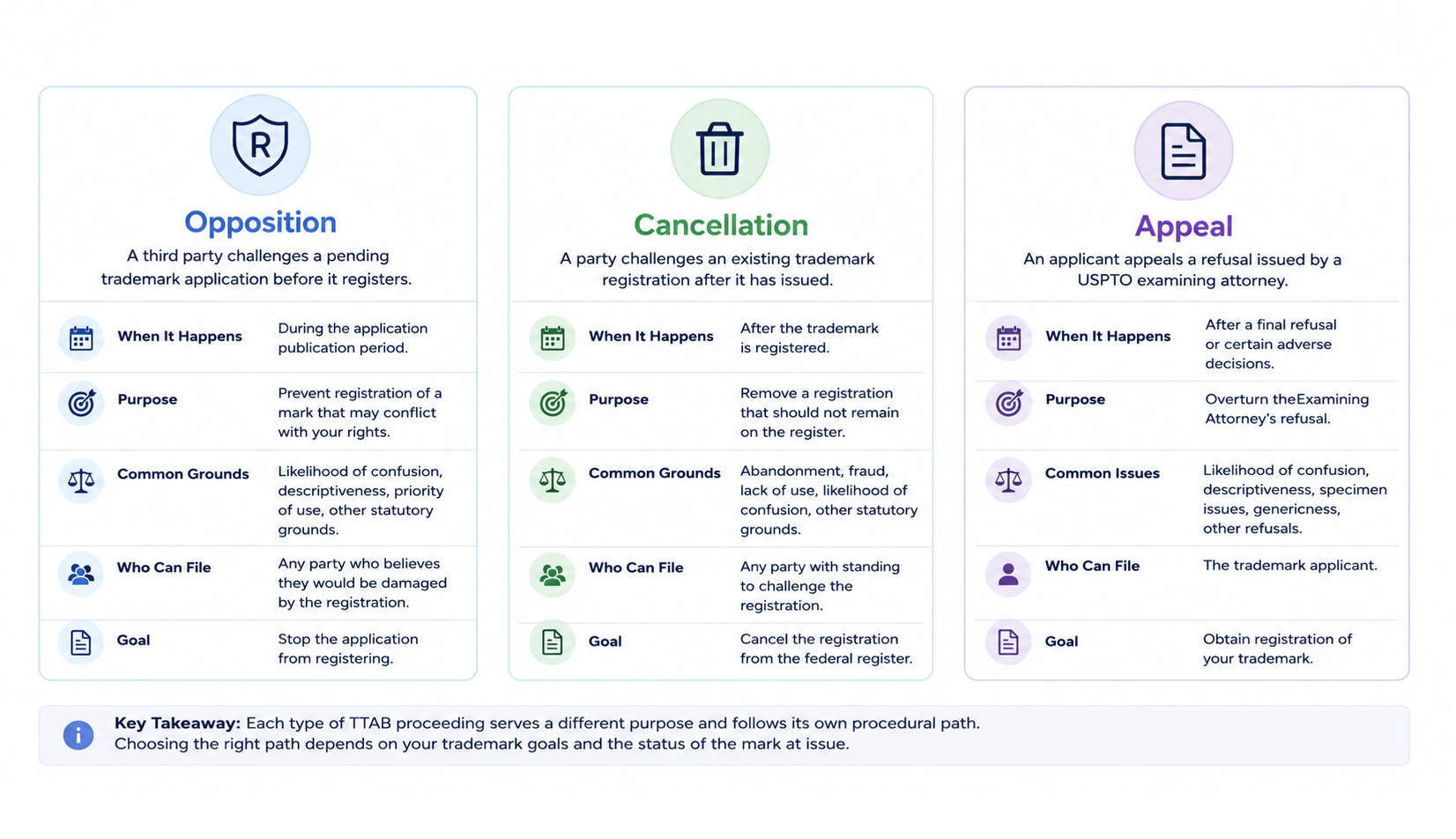
TTAB proceedings generally fall into three primary categories: oppositions, cancellations, and appeals. Each type of proceeding serves a different purpose and follows its own procedural path.
An opposition allows a party to challenge a pending trademark application before it registers. These disputes often involve likelihood of confusion, descriptiveness, priority of use, or other grounds that may prevent registration.
A cancellation allows a party to challenge a trademark registration that has already issued. These cases may involve abandonment, nonuse, fraud, likelihood of confusion, or other issues affecting the validity of the registration.
An appeal asks the TTAB to review a refusal issued by a USPTO examining attorney. Appeals are typically decided on the written record and require focused legal argument based on the existing application history.
TTAB proceedings are highly procedural. Even strong claims or defenses can be weakened if a party misses a deadline, files the wrong document, fails to preserve evidence, or misunderstands the scheduling order.
From the start of a case, the TTAB sets deadlines for pleadings, discovery, disclosures, motions, testimony, and trial briefs. These deadlines are not just administrative details. They shape the record, define the issues, and determine what evidence can be considered.
Understanding the TTAB process helps parties avoid defaults, missed deadlines, unnecessary motion practice, and costly procedural mistakes.
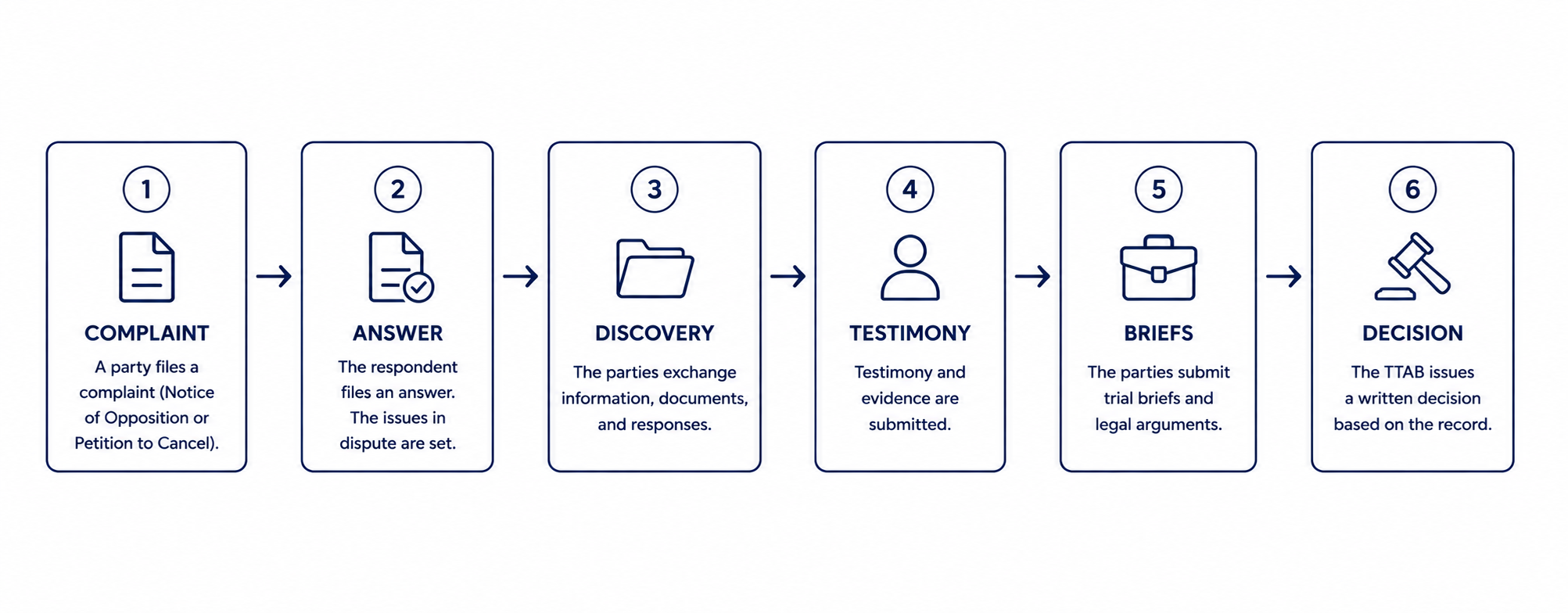
A TTAB case follows a structured process that resembles litigation, but it takes place before an administrative tribunal rather than a traditional courtroom. The process often includes pleadings, disclosures, discovery, motions, testimony submissions, trial briefs, and a written decision.
Because the TTAB relies heavily on written submissions, parties must build the record carefully. Evidence that is not properly introduced may not be considered. Arguments that are not clearly supported by the record may carry less weight.
Understanding each stage of a TTAB proceeding allows parties to prepare earlier, manage risk more effectively, and make better strategic decisions throughout the case.
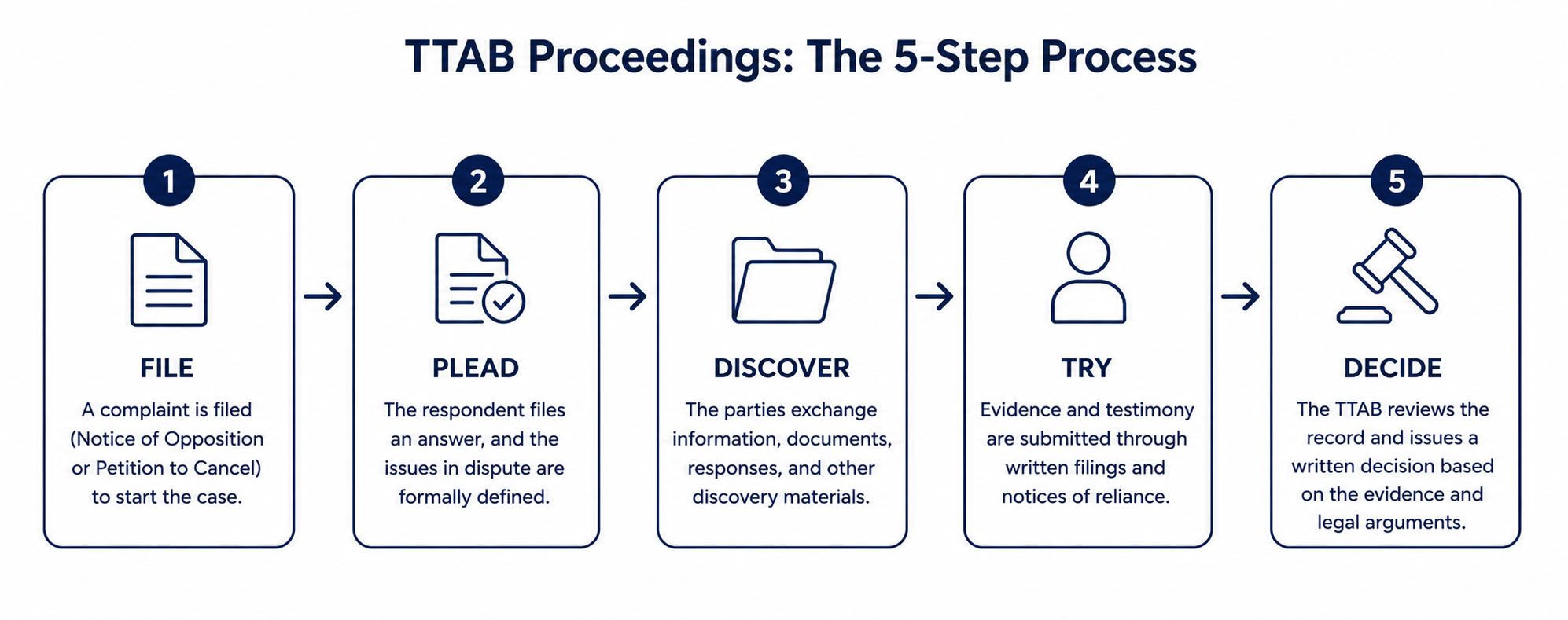
Process Overview
- Filing a TTAB CaseThe process begins with a notice of opposition or petition to cancel, which identifies the parties, claims, and legal grounds.
- PleadingsThe responding party files an answer, and the issues in dispute are formally defined.
- DiscoveryThe parties exchange information, documents, admissions, and testimony-related materials.
- Trial PhaseEvidence and testimony are submitted through written filings, depositions, notices of reliance, and other permitted procedures.
- DecisionThe TTAB reviews the record and issues a written decision based on the evidence and legal arguments.
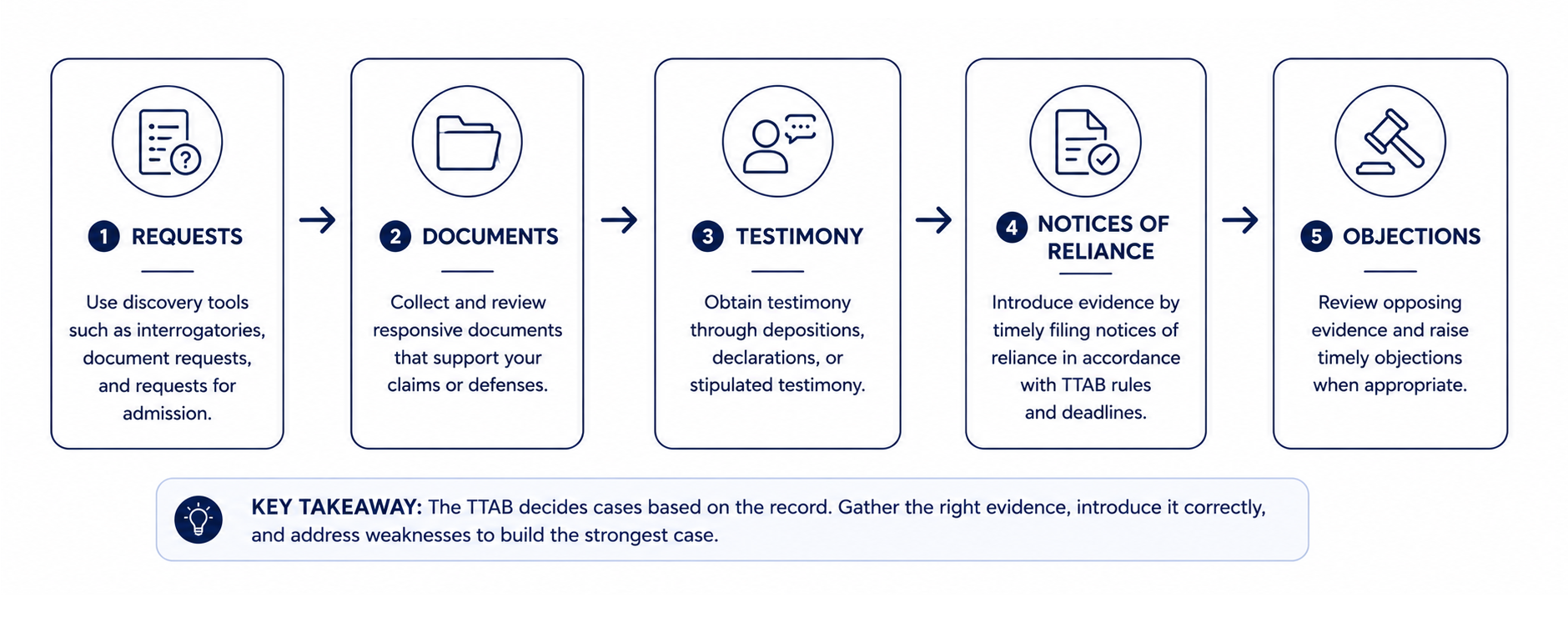
Evidence often determines the outcome of TTAB proceedings. The Board evaluates the record presented by the parties, which makes discovery, testimony, authentication, and admissibility critical.
During discovery, parties may use interrogatories, document requests, requests for admission, depositions, and other tools to develop the factual record. But gathering evidence is only part of the process. The evidence must also be introduced correctly during the appropriate phase of the case.
Because TTAB cases usually do not involve live courtroom testimony, written evidence and procedural compliance carry significant weight. Missteps in timing, format, authentication, or notices of reliance can prevent important materials from being considered.
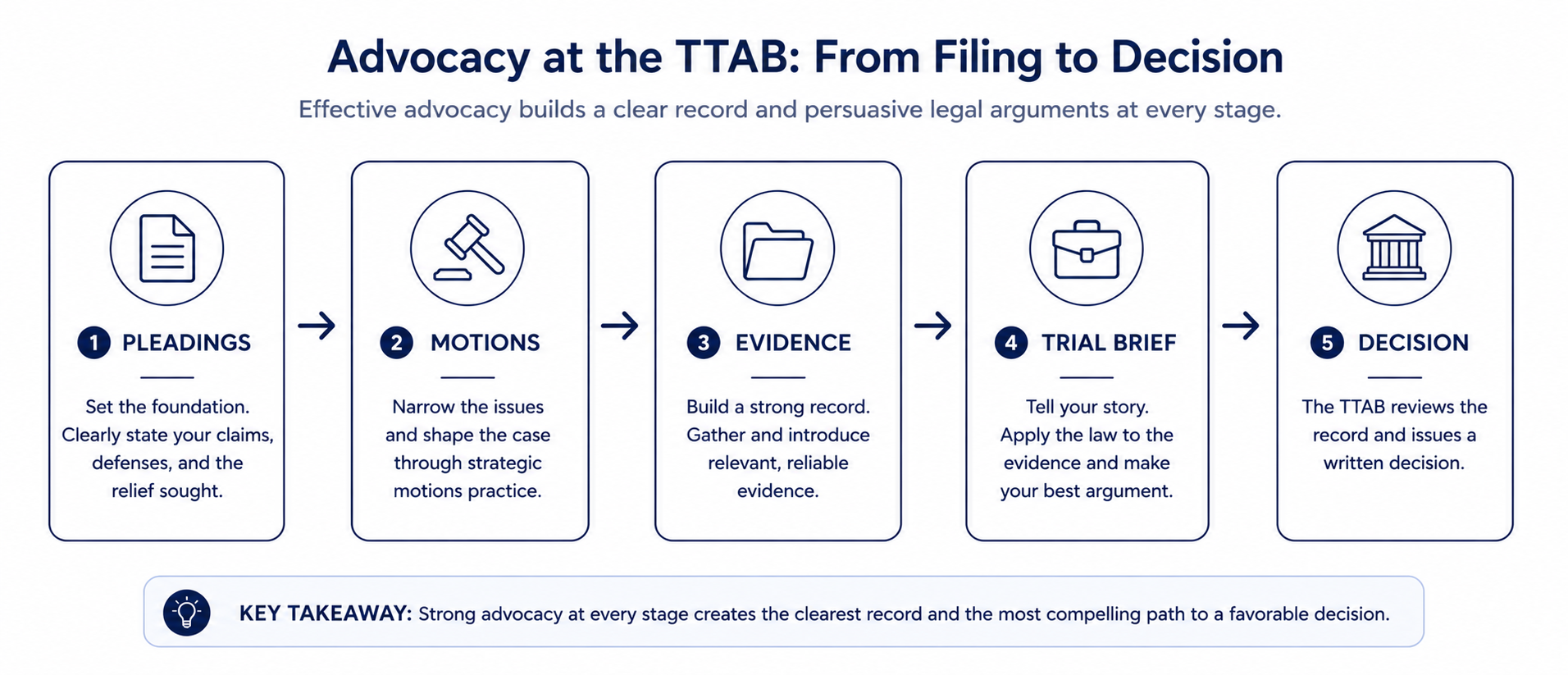
TTAB advocacy is largely written advocacy. The strength of a party’s pleadings, motions, evidence, and trial briefs can significantly influence the outcome of the case.
Motion practice may involve motions to dismiss, motions to strike, motions to compel discovery, summary judgment motions, or procedural requests. Some motions can narrow the case or resolve important issues early. Others can increase cost and delay if used unnecessarily.
At trial, the parties present evidence and legal arguments through written submissions rather than live courtroom proceedings. Clear organization, accurate citations to the record, and focused legal reasoning are essential.
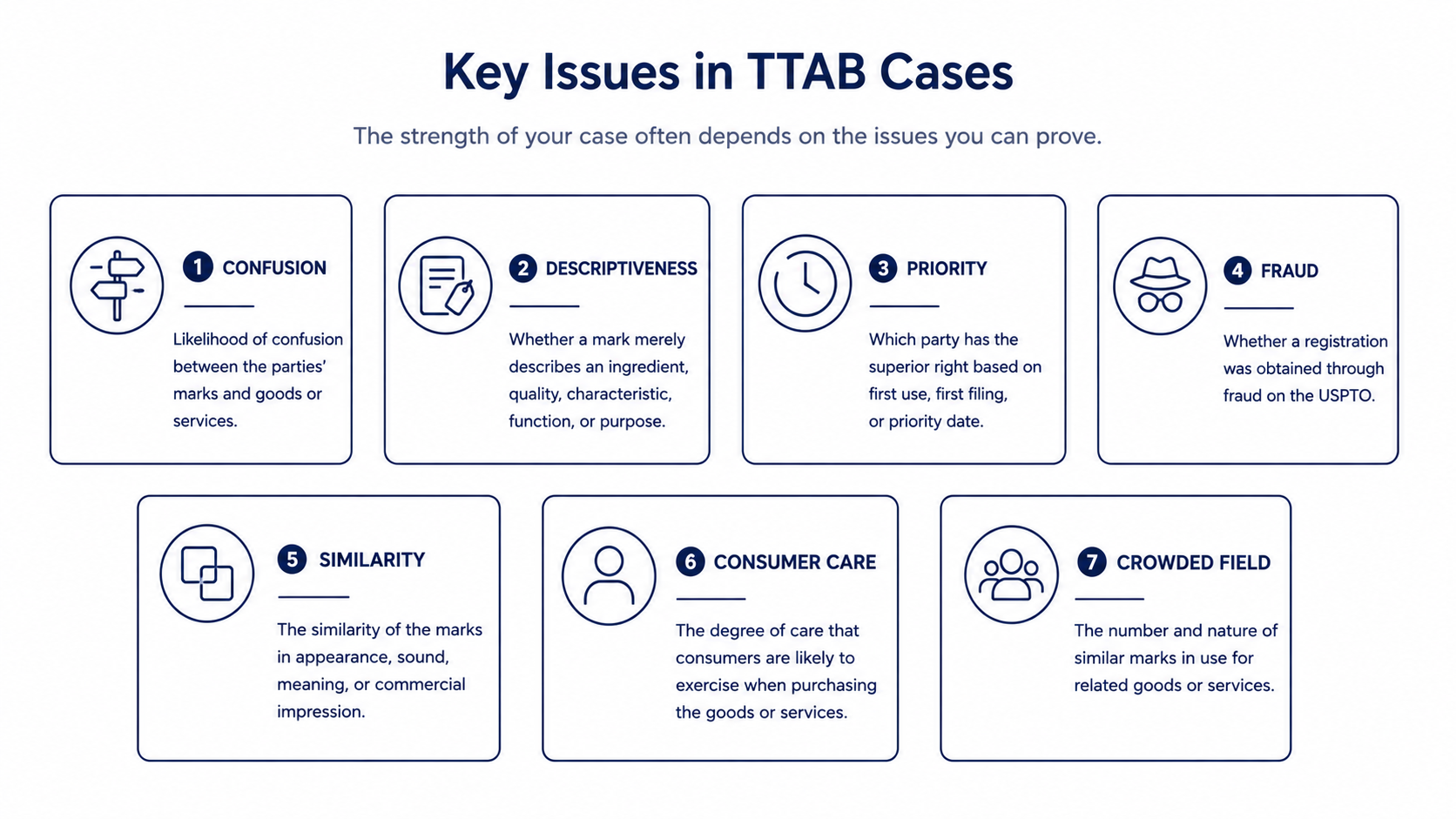
Many TTAB disputes turn on recurring trademark issues. These commonly include likelihood of confusion, descriptiveness, genericness, priority of use, fraud, abandonment, similarity of marks, consumer care, and third-party use.
Although these issues appear frequently, the TTAB evaluates them through specific legal standards and a detailed factual record. A small difference in evidence, timing, market context, or argument strategy can affect the result.
Understanding these common TTAB issues can help parties assess case strength, identify weaknesses, prepare evidence, and make more informed decisions about settlement or trial.
TTAB cases are not just procedural exercises. They are business decisions. A party may have strong legal arguments but still need to evaluate cost, timing, settlement leverage, marketplace risk, and whether the TTAB can provide the relief needed.
Early strategic decisions matter. These include whether to file, whether to oppose or negotiate, whether to pursue cancellation, how to respond to discovery, when to file motions, and whether settlement is more practical than trial.
A strong TTAB strategy connects the legal issues to the business objective. The goal is not simply to litigate. The goal is to protect the brand, manage risk, and choose the path most likely to produce a practical result.
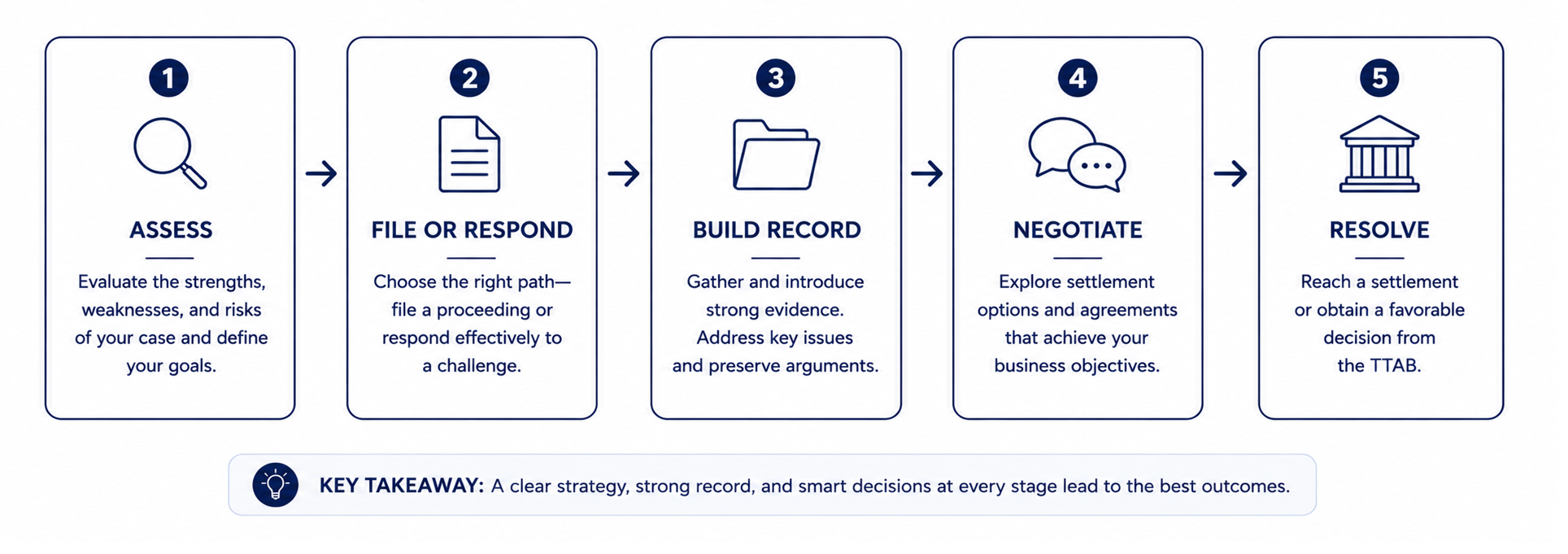
Explore the full collection of TTAB-related articles covering oppositions, cancellations, appeals, deadlines, evidence, discovery, motion practice, trial strategy, and practical considerations across all stages of a trademark dispute.
This library brings together in-depth guidance, procedural insights, and strategic analysis to help trademark owners, applicants, and businesses better understand how TTAB proceedings work.
If you are facing a TTAB opposition, cancellation, or appeal, working with an experienced trademark attorney can make a critical difference in the outcome of your case.
TTAB proceedings may be more limited than federal litigation, but they can still have major consequences for brand protection, registration rights, and business strategy. Whether you are enforcing your trademark rights, defending an application or registration, responding to a proceeding, or evaluating settlement, the next step is a clear legal strategy.